Showing posts with label Free Market Economics. Show all posts

Friday, January 05, 2024

A Case Study in Technological Capitalism: Part III: Creative Destruction


                                      These bespoke Xenotron machines were killer products in the 1980s.. Joining
                                      Xenotron in 1984 was to have a greater effect on me that I could ever guess.


I've recently completed the third and final part of my "Xenotron" Capitalist Case Study. All three parts describing the relatively brief existence of Xenotron ) can be found in these links:

Part I:  Rise and Fall 1976 to 1986

Part II: Under the Doctors 1987 to 1989

Part III: Creative Destruction 1990 to 1991

Having now got an overview of all three parts it is likely that the whole history now needs a rewrite at some stage; if I get round to it. 

The corresponding blog posts for Part I and Part II can be found here:

Quantum Non-Linearity: A Case Study in Technological Capitalism: Part1: Xenotron vs Paleontological Man. (quantumnonlinearity.blogspot.com)

Quantum Non-Linearity: A Case Study in Technological Capitalism: Part II. Under the Doctors. (quantumnonlinearity.blogspot.com)

Some might call the existence of Xenotron a flash in the pan. But like a super nova explosion it seeded the world with the elements of many an idea; hence "Creative Destruction". 

Below I reproduce the introduction to the final part "Creative Destruction". 


Introduction

The Xenotron Adventure

In Part II we saw how by October 1986 Xenotron had become a subsidiary of Dr. –Ing. Rudolf Hell of Keil.  By the spring of 1990 when the history in this episode starts business in Xenotron’s high profit margin legacy technology was still brisk although on a downward curve. Ominously Xenotron’s CEO and “company doctor” Danny Chapchal resigned in late 1989. Chapchal’s vision to turn Xenotron into a high-volume low profit margin business was clearly incomplete although high volume & low profit margins were the industry trend. So, it remained to be seen what Dr Hell would do with Xenotron. As we shall see in this part Hell merged with Linotype and from the first signs that this merger was going to take place it became apparent that there was no rationale for the continued existence of Xenotron as a corporate identity and Xenotron’s remnants were, in fact, wound up in less than 18 months. Some of the details of this wind up can be found in this history. But let me caution once again: My perspective as a bits-and-bytes programmer was limited to observing rumour, memos and press releases – others who were closer to the management action will know more. This history, therefore, is a personal view; in fact early on in my Xenotron career I must have realised that something interesting was happening in Diss because for some reason I started collecting memos, documents, press clips and even hearsay as soon as I joined in 1984.

Xenotron was not only a great adventure while it lasted, but it had also made its name in the history of printing. This fact was recognised by the London Science Museum who had commissioned a working XVC2 page makeup exhibit. When I started with the company in February 1984 it was still (just) riding the crest of the wave: Small, intimate and with improvised warehouse premises in the insignificant market town of Diss, it had the feel of a rural cottage industry and yet it was manufacturing and selling a world beating product. That I had arrived at the peak of its business when from then on the only way was down wasn’t noticeable for another year or two – although having said that those with a management overview probably saw the writing on the wall sooner.

I have to make a confession here:  Although I thoroughly enjoyed tinkering around with the bits and bytes of Xenotron software I had no vision for a fast changing market and quite frankly the high level whys and wherefores of the printing industry bored me. I was quite happy to leave the management view to others who would be much more competent than myself in that field. I was there to earn some money (fortunately in a job I enjoyed) so that I could get on with my own self-inflicted research projects at home. But somehow these private endeavours were to become linked to Xenotron’s culture of success: Understandably there was a feeling abroad at Xenotron that it was possible for an upstart small player to punch well above their weight even in a global context. As Tim Coldwell puts it in an email I reproduce toward the end of this history: “I believe that the main thing is to have a go and I am very pleased to hear that such a spirit is once more emerging in the formation of Hydra Design”.  Hydra Design was the Xenotron spin-off I was to join in the autumn of 1991 when the remnants of the Diss operation were wound up completely. But well before that, the have-a-go-spirit Tim Coldwell talks of had affected me. After all, from 1984 I was part of a world conquering team who were making printing industry history and that made me feel that I also could achieve anything.


Personal impact

From an early age I experienced what I can only call the existential shock of finding myself with that enigmatic gift of the conscious awareness of existence and identity. What was the explanation of this self-awareness? There seemed to be none; my existence was unjustified, a brute fact that had no deeper explanation.  Conscious existence was a huge mystery to me and this mystery prompted me to question, probe, and investigate from an early age. During those long school holidays in my first job as a reluctant science teacher I would explore and write as a kind a therapy that would bring a quietus to my existential dread. I mention this very personal aspect of my life because joining Xenotron may have a bearing on the history of my private research and above all my confidence. On arriving at Xenotron I seemed to get new impetus and optimism in my private work as unaccountably things started falling into place leading to new thoughts on probability, randomness, Thinknet and Quantum Mechanics; all very ambitious, very audacious projects, but in many respects I regard them as successful in illuminating my predicament. I remember in particular those evenings at some very pleasant hotels as I returned late from an enjoyable day working on site programming the XVCs in machine code….I would then proceed to work on my own projects. The unspoken Xenotron ethos was that confidence, optimism, a willingness to have a go, supplemented by some hard graft was all that was needed to achieve one’s objectives; you can make history even if you’re a yokel in an obscure market town in a rural area. This ethos had rubbed off on me. It was during this time that I wrote my one and only officially published paper on the subject of probability (See aforementioned links). Looking back, I can only think that my having the temerity to think I could publish in a prestigious philosophy journal must have had something to do with the "have-a-go" spirit of Xenotron. Also I compiled a private paper on the nature of randomness and latterly started on my Thinknet project. These projects were just the precursor of even more grandiose thoughts which were expressed during my time with Hydra Design (See aforementioned links). I trace at least part of my ambitions or should that be my over ambition to the influence of my Xenotron days where unbridled optimism and punching above one’s weight felt like normalcy. The message at the heart of Xenotron’s success was “Upstarts can do it!”


The Demise

But as we shall see in this history confidence can cut both ways because one cannot easily factor in the business market (or the ideas market or that matter) which has a mind of its own. The ever-changing worlds of both technical innovation and the demands of the market are a product of a coupled system: Viz: Technical innovation effects market demand and conversely market demand effects technical innovation. You can bet a complex feedback system like this is going to be non-linear and therefore liable to the unpredictables of chaotic complexity; such complexity readily humbles the overconfident by proving that winning streaks don’t last forever.

But I can’t complain: My eight years at Xenotron, even though they were its decaying years were still very special and exciting (not least because the resolve behind my private work had been strengthened by the Coldwell upstart-spirit).  For this thanks must go to Tim Coldwell and Ian Houghton who started the whole saga that many employees look back on as some of the best years of their working lives.

For me personally I also thank the following: Thanks must go to Martyn Elmy and Bob Lesley who made me feel welcome when I first joined Xenotron (Bob & Martyn went on to start the Xenotron spin-off company Centurfax). Thanks also to Peter Rouse who for a while was my software manager and who supported me when I was involved in an awkward installation with an unreasonable customer.   Also special thanks must go to Laurie Dickson who always seemed a calm and understanding manager: I enjoyed 15 years in his Xenotron spin-off company “Hydra Design”. Unfortunately, Peter Rouse, Laurie Dickson, Martin Elmy and Tim Coldwell are no longer with us but they will remain in our memories.

When I look back I realise how fortunate I was to join Xenotron: “Good luck” some would call it. It was a unique history-making company at the top of its game. Situated as it was, not in some impersonal inner city office block or a sprawling boring industrial estate churning out boring old widgets, but instead in the bucolic environment on the border of the rural counties of Norfolk and Suffolk. It was therefore close to nature and the agricultural base of all civilisations. Perhaps I’m stretching it a bit, but it was the kind of location the 18th century romantics could write poetry about. Moreover, picturesque Constable Country was just a little way down the road. And yet in spite of its location Xenotron was a cutting-edge high-tech world class company. It was as if the existential angst which has so often accompanied the contention between nature and wealth generating smoke-stack industry, a contention which triggered the romantic reaction, had at last been resolved.

Most jobs are relatively routine unromantic bread & butter type jobs situated in boring environments, but Xenotron was refreshingly different on both counts. But for me it very nearly didn’t happen. I was unemployed at the beginning of 1984 and I had already applied for many jobs. The application for the Xenotron vacancy nearly didn’t get posted as it lay neglected on our sideboard and only eventually got posted because the wife urged me to post it; so what if I missed the application date to yet another run-of-the-mill job vacancy? As far as I was concerned it was just another one in a hundred. For a while me joining Xenotron hung by a thread: I had absolutely no idea that this job was a unique posting, the kind of opportunity that doesn't knock often: The perfect environment and a world class job.

The creative destruction of capitalism doesn’t give a damn about whether or not one’s working environment is a uniquely satisfying affair with a homely village community feel which many would give their eye-teeth for. If it doesn’t fit into the ever restless and changing ferment of the market kiss that job and the human relationships it entails goodbye and move on. This tendency toward market turbulence and the survivalist need to fight for one's corner takes a toll on human relationships and therefore it’s no surprise that those who seek to overthrow capitalism co-opt social alienation as justification for their cause. But then without the creative destruction of capitalism Tim Coldwell’s and Ian Houghton’s self-motivated entrepreneurial spirit wouldn’t have found the freedom of expression to achieve what they achieved and many of us who joined Xenotron wouldn’t have had such interesting jobs. However, the story of Xenotron reveals some of the social tensions which may arise within the free market system. There is therefore a need for the democratic regulation of society to help head off some of the disaffection and alienation endemic to capitalism, problems which are readily exploited by the extremes of left and right as they seek to overthrow democratic government in favour of their ideologies. 

Saturday, August 26, 2023

Climate Change Discussion: Climate Alarmism vs. Climate Complacency


Me standing on a granite tor on Bodmin Moor in 2006. The climate


I recently had an email discussion on the subject of climate change with James Knight over a period of a few weeks. James published an edited copy of the contents of this discussion on his blog and then added further comments of his own.  This means that the email discussion went through five iterations, with James' edited and supplemented copy on his blog being the fifth iteration. Of course, should I take up the challenge and respond to his blog post with its extra content then that would be the sixth iteration. 

I thought I'd better make available the full original discussion (i.e. up to the 4th iteration) which can be accessed here.  At some stage I might get back to James in reply to his fifth iteration. However, I have to confess my interest in the subject began to wane as I find physics and mathematics far more exciting and, if truth be known, much easier to handle. Climatology by itself is an interesting subject as it's all about systems theory, but it is the theory of very complex systems. Climatologists are respected scientists but no doubt the sheer complexity of the system they are dealing with makes it difficult to arrive at firm conclusions. But that's nothing compared to the chaos of politico-economic thought which deals with how humanity should react to climatology. It is here that huge vested interests and valued judgments make themselves felt as left and right extremists exploit a climatological scare story to agitate for social unrest with the aim of realizing their particular socio-political vision. 

James often uses the term "climate alarmism", an emotive term used by those skeptical of the predictions about dangerous levels of climate change. Climate alarmism as an emotive term is unlikely to be a monopole, and so in order to express its opposite pole I have coined the equally emotive term climate complacency.  A less emotive term is climate concern. But from the perspective of the politically polarized extremes climate concern looks to be either a form of climate alarmism or climate complacency depending on which polarity floats your boat. 

At one point in the discussion James said I had constructed a strawman of his position. I'm very glad he saw it like that because that means he didn't take ownership of these strawmen.

Nevertheless, it was a fruitful discussion and, many thanks to James, got me out of my intellectual comfort zone for a while: I publish the introduction to Iteration No 4 below. It remains unfinished business as far as I'm concerned and iteration 6 calls. But things are moving so fast with the atmosphere that I have a feeling the climate itself will have the last word! 


INTRODUCTION

The eruption of Santorini circa 1200 BC probably help bring the otherwise rich Minoan civilisation on Crete to its knees. That they were quantitatively rich was no help in this one off disaster. What they needed was to be the right kind of rich: that is, to be rich in the kind of technology that would help proof them against the tsunami caused by the Minion eruption. Likewise a blind libertarian market may find itself helpless in the face of one-off environmental challenges because with a sample of zero a blinkered market learns nothing and simply isn’t ready with the right technology. Efficiency in current technological needs will be an irrelevance.

In my opinion a realistic portion of the capital generated by the market must be invested in blues skies research which looks for possible threats to civilisation (e.g. Rogue asteroids, super volcanoes, tsunamis etc.) and investigates how to respond to them. Hence, the quantitative riches generated by free trade must be supplemented by qualitative  technological riches which facilitate proactive environmental control. Proactive environmental control entails extending the human environmental bubble rather than sitting passively in the bubble we already control thinking that as long as we have stacks of cash to defend that bubble we are OK. But in actual fact the history of human civilisation is one of proactively extending the environmental bubble humanity controls; this started with the transition from hunter-gathering to agriculture.

I have little optimism in a wait-and-see policy which hopes that the unforetold riches of the future will make civilisation environment proof in the face of threatening one-off environmental challenges.  The libertarian blinkers must come off and a passive market must become a proactive one; that is, one that is aware of the technological changes needed for the next stage in the extension of civilisation’s environmental bubble. Therefore the market must have a qualitative vision toward the end of proactively extending environmental control and not just a quantitative vision of being rich in the abstract.

A major worry I have about capitalism is its proneness to the social cancers of Marxism & Fascism, products of the social discontent it seems to generate. We must view the market as a tool of humanity and not an unaccountable process that humanity must submit to at all costs: Therein lies the problem, however: Humanity doesn’t readily submit to a blinkered market and the result is social disaffection and discontent. It may therefore be necessary to cool the market down to help freeze out the inequalities, resentments and alienation that are fertile ground for the growth of Marxism and Fascism. It’s all but useless to attempt to convince the discontented, the disaffected and the alienated that the capitalism of the past has made them as rich as they are currently: Yes, in times past they might have worn rags, suffered from cold and gone hungry, but moderns who can only get a cut out of societal wealth by going down to the foodbank and get help to pay bills don’t feel rich; instead they may feel humiliated by the one way dependency – let’s remember here that once the base of Maslow’s hierarchy is secured the feeling of being rich is a sense of well-being  conveyed by one’s position  relative to the rest of society. In short feeling rich is about social status;  that is how one  measures up against the people of society as a whole.  Therefore, it is also futile to tell the poor that free-for-all capitalism will make their children’s children stinking rich.

Of course this doesn’t mean we should dispose of capitalism and the market but it does mean that political & social solutions are needed in order to stabilise an otherwise socially rickety system which could find itself teetering on the edge of the Marxist and/or fascist revolutionary abyss.

Humanity has a tense relationship with its systems of government; probably because government is at best hard put to it to promote justice and wealth among its citizens, and at worst is the seat of despotic power. It is no surprise therefore that both Marxists and libertarians seek to replace government with a folksy idyll where the trappings of state and government are minimised. But the Marxist and libertarian way, after the overthrow of the status quo are liable to leave a power vacuum that would attract autocratic rule. Marxism and libertarianism may start out by going in the opposite directions of collectivism vs individualism but they end up arriving at the same place – the dictatorship of the few.

The question of the role of market and government in the face of threatening environmental changes seems just as murky as when I started considering it. Yes there are lots uncertainties and hand waving associated with those climate models, but the uncertainties and hand waving are even greater for those who are trying to work out the implications of the climate projections for the notoriously difficult world of politico-socio-economic policy adoption, whether those policies be to impose emission targets or to adopt live-and-let-live libertarianism or, which seems most likely, something in between.


Relevant links:

Minoan eruption - Wikipedia

Welcoming the End of Our World - John Templeton Foundation

Friday, May 28, 2021

Watson, Crick, Franklin, Wilkins & Scientific Wisdom.

DNA Pioneers: James Watson, Francis Crick, Maurice Wilkins and Rosalind Franklin. 


I recently re-watched a video I had recorded way back in the March of 2003. It was recorded from the UK's Channel 4 and was entitled DNA: The secret of life. It told the story of the discovery of the structure of DNA. James Watson, Francis Crick and Maurice Wilkins appeared on the programme. Also appearing was Raymond Gosling who at the time was a PhD student and lab assistant to Rosalind Franklin. According to the program Franklin and Wilkins of King's College were the experimentalists who generated the X-Ray diffraction patterns which so helped Crick and Watson to successfully theorise about the structure of DNA. It's not that the King's College team weren't theorists themselves, but they also did the hard work of getting the necessary experimental data about DNA. It is very easy to put Crick and Watson into the role of the "lazy lads" who just theorised together down at the pub and let others do the hands-on science. That they appeared to be riding on the backs of others was the cause of tension. But whatever, they were clearly very bright guys who can rightly claim credit for making the right inferences from the data. It didn't help the King's College team that Franklin and Wilkins had a poor relationship; in contrast it seems that Watson and Crick worked well together (and drank well together!). Also, that Franklin was a pretty woman in a largely man's world may have introduced frustrating pressures and detrimentally affected her attitudes. Or perhaps she was just a awkward personality.

The programme tells us of Watson and Crick's first attempt at a model. The King's College team came to have a look at this model. But when Rosalind Franklin saw it she laughed out loud; in the light of the experimental data the King's team had accumulated the model was clearly wrong. Watson & Crick were suffering from their working in a too rarified experimental semi-vacuum. Then one day Wilkins, who seems to have been an obliging sort of character, showed Watson an X shaped diffraction pattern that the King's team had obtained. Watson and Crick knew immediately that this implied DNA was a double helix and they went on to develop the correct model we are all familiar with.  Lab assistant Ray Gosling takes up the story:

Wilkins undoubtedly (and I think if you ask him he will say he did), if there are any cats to be let out of any bags, he had done it.

To which Wilkins responded:

Well I suppose it's perfectly true, but science isn't supposed to be kept in bags, no more than cats. I mean, I don't know what he means but I don't like as a scientist working away and sort of "Oh no! I mustn't tell the other scientists". I don't think it's the way to be working. Science ought to be an open activity, so you can work as a community. 

Well yes, in theory, that's the ideal world: that's wisdom we should aspire to, take home and act on: But no, we aren't in that kind of world; we're in a human world. Human beings can't be so detached and dispassionate. Competition, reputations, making a name for yourself, not to mention wealth & fame are at stake and have a strong tendency to trump the cooperation and community effort thing. The consequent mutual distrust means that people keep their cards close to their chests. Competition vs community effort! It's all very reminiscent of the capitalist conundrum of free market vs community.  And yet again I'm reminded of Philippians 2:1-11 which seems to be the key to community living

During the program, Maurice Wilkins also came out with another pearl of Wisdom. As we've seen Crick and Watson's first model was laughed off stage by Rosalind Franklin. But of this failed attempt Wilkins comments wisely as follows:

One might say but why not? It's an exploration to make a model. You make a model and if you make a bit of a fool of yourself in the process why worry? ....you might get lucky!

A big lesson there for all blue sky theorists: Its any exploration and there's no telling whether you are going to  make a fool of yourself or win the jackpot - most likely the former,. So enjoy he ride while it lasts; you may not be the chosen one after all!

Useful Link:

https://www.theguardian.com/science/2015/jun/23/sexism-in-science-did-watson-and-crick-really-steal-rosalind-franklins-data

Thursday, July 30, 2020

Marx vs. Smith

On the left, Marx and on the right, Smith: They are facing in opposite directions and yet there is an ironic connection. Marx despised government as the protector of the property of the owning classes, to be done away with in a communist classless society of common interests. Likewise some of Smith's libertarian followers see Government as the problem rather than the solution and seek to minimise it. But neither the pure communist nor pure libertarian visions have ever been realised and tested in practice. The ideal role of Government may in fact be that of a democratic argumentative forum protecting us from the totalising & hegemonic visions of radicals and idealists whose efforts ultimately favour anarchy in the first instance followed by anarchy's drastic antidote in the second instance - dictatorship. 


Recently Blogger seemed to be corrupting posts when they were edited. Hence to be sure of fidelity the rest of this article can be found in the PDF  here

Thursday, May 21, 2020

Contradictions, The Academic Establishment and Matt Ridley.

Complete freedom entails freedom to undermine freedom. 


The content behind the word "Libertarian" is problematic. At one time the far left claimed this content: Libertarianism's implicit anti-government and anarchist connotations were comfortable concepts with the far left: In Marxist eschatology a centrally managed state run socialism was supposed to eventually give way to a decentralised stateless communism; in Marxist theory the state really only serves the function of protecting the interests of the ruling class; therefore once this class was done away with no state would be required - so they thought*.  It is huge irony, then, that today the "libertarian" sentiments have been taken over by the far right whose lack of influence (up till now!) makes them naturally suspicious of central government intentions. They also affect to believe that decentralised market choices and the entrepreneurial spirit are the best expression of democracy; maybe the only valid expression of democracy (See this wiki page for more on the subject of Libertarianism)

But "Libertarianism" with  its connotation of freedom, freedom of choice, freedom to exercise responsibility to build a successful life, freedom of speech and above all a fancied freedom from government has inherent contradictions  For in a world full of zero sum games we have more often than not this constraint:

 My freedoms + your freedoms  = constant

That is, too much freedom for me may subtract from your freedoms. Freedom then is about balance & community, and good community means taking into account the freedoms of others.  This is just as true of so-called "free speech" as it is for access to material resources: A vociferous campaign of free speech against another party can curtail their freedoms. Language can be used as an instrument of coercion; that becomes especially clear when we remember that social connection & status are among humanities strongest motivations and speech is the first port of call to be used to assert pecking order. Absolute "free speech" is a contradiction if we are to respect community.

The anti-government stance of extreme "libertarian" leftists and rightists is an affectation: When they claim to be anti-government what they really mean, of course, is that they are anti status quo and anti-establishment; they are in effect anti those institutions of state over which they have little influence. If the revolutions which they aspire to ever took place you can rest assured that these extremists would soon install the strongest forms of government in order to coerce and maintain their vision of society i.e a dictatorship:  As I said in my last blog post:

Looking at the mix of potential plutocrats, domineering characters and the well armed quasi-militias (in America) who make claim to the name "libertarian" it is easy to imagine a would-be-dictator arising from their ranks. And it wouldn't be the first time that "liberty" and "hegemony" have walked hand in hand; let's recall the outcomes of the English civil war of 1642, the French revolution of 1789, the October revolution and Mao's China. Idealism and hegemony are closely linked.

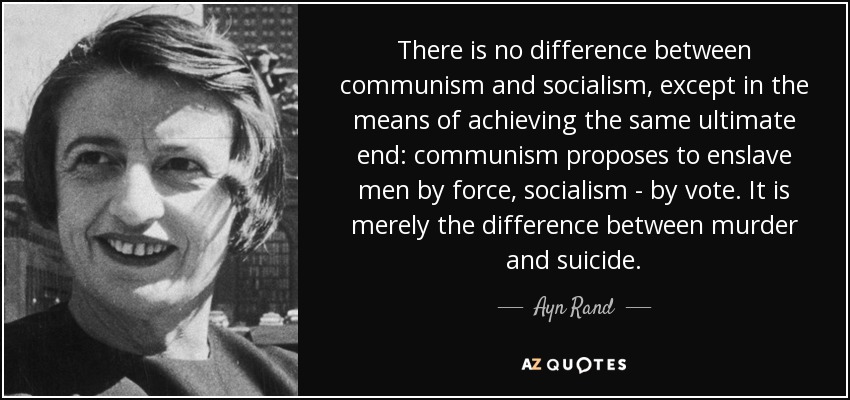
It is likely that Ayn Rand's vision of a sociopathic "libertarian" idealism, if implemented, would very quickly lead in this direction. I've got more than a sneaky feeling that the putative libertarianism of left and right is motivated by a mix of misguided idealism and sour grapes: i.e. those who want power or want more power want the status quo to move over...or else.

So with this background in mind I thought I'd have a little walk over to Matt Ridley's website to see what he's saying about covid-19.  After all Ridley styles himself (unwisely in my opinion) as a  "libertarian" whatever that abused term actually means in his case. Moreover, covid-19 has rather curtailed the freedoms of many and some extremists on the right are quite sure this is a well orchestrated deep government plot (or conspiracy) to suppress people rather than being just another black swan afflicting humanity.

So was Ridley going to join the Trump supporting conspiracy theorists? Well no, he's far too clever for that I'm glad say. In fact in reading his blog I found a lot of good and intelligent stuff there that I wouldn't want to take issue with and could recommend. But there remains the question of which tribe, if any, does he identify with? There are to my mind indicators to be found in his writings that he identifies with the tribal right-wing. Here are three examples where Ridley betrays his right-wing tribal sympathies:

Example 1
Take this blog post here where Ridley discusses the apparent slow down in technological advance in various industries, an example being aircraft: I had long noted this one myself: My father's life time saw progress from the first rickety bi-planes right through to space travel. But in my life time jet aircraft, although more refined and complex, seemed to have plateaued in their performance envelop. Manned space travel has also plateaued in my time. The same is probably also true of automotive technology. I put this down to the limitations within the platonic world of technological configuration space which is constrained and controlled by a physical regime over which we have no power to change. Delving into  this space is a bit like mining for gold; there comes a point of diminishing returns where more and more effort is needed to get out less and less out. Consider for example computerisation; Moore's law applies for a while and fast progress can be maintained initially, but not indefinitely. For we know that there are physical limits on what can be stored and processed using the current physical paradigm. If we are to do better, new (and often unforeseen) technological breakthroughs are required. There could be another revolution in computerisation if breakthroughs in quantum computing take place. Likewise we would see huge market changes if there are ever breakthroughs in portable fusion energy, zero point energy or anti-gravity; in fact such changes would likely require new and revolutionary understandings in theoretical physics to be made first.

I'd be the first to admit that market catalysed innovation and wealth can be suppressed and/or discouraged by cultural and political factors. But for a right wing trouble-shooting political animal like Ridley politics is his first of port call: In Ridley's mind, not to mention the minds among his class affiliation, bad government regulation is the usual suspect suppressing progress. That the platonic world of configuration space has an important bearing on progress hasn't come into his consideration here. Ridley's "libertarianism" sets him up for a default which means that government regulation of business must come under first critical scrutiny. But if Ridley and his tribe, as they make a grab for wealth, think they can leave the poor as a trickle-down-after-thought then they are encouraging alienation & disaffection, and handing society on a plate to the revolutionaries.

Example 2
Let's now look at a blog post by Ridley on covid-19. The post is largely filled with sensible and informative observations - it's worth reading. But Ridley may well betray his tribal affiliation when he gets to this:

,…. This idea could be wrong, of course: as I keep saying, we just don’t know enough. But if it is right, it drives a coach and horses through the assumptions of the Imperial College model, on which policy decisions were hung. The famous ‘R’ (R0 at the start), or reproductive rate of the virus, could have been very high in hospitals and care homes, and much lower in the community. It makes no sense to talk of a single number for the whole of society. The simplistic Imperial College model, which spread around the world like a virus, should be buried. It is data, not modelling, that we need now.

Once again the Ridley is found rubbishing the establishment, this time the (undoubtedly left leaning) academic establishment. Ridley's response here is very reminiscent of the right-wingers I mention in this blog post  where we find these right-wingers expressing suspicion of "modelling" and even going as far as to suggest that modeling isn't science; rather they want something "empirical"! The right-wingers I mention in that post are so stupid as to be unable to see that modelling is all about modelling empirical reality and therefore in science modelling and data go together like coach and horses.

But the problem Ridley and his tribe have is that "modelling" usually comes out of university theoretical departments. The right-wing tribe, as a rule, don't like university departments because they don't have too many allies in that sub-culture, a sub-culture which is not particularly motivated by profiteering and market choices, but whose income is pretty much tied to taxation; i.e. universities are a department of government! Therefore they must be bad!

Of course we never know enough and we always need more data but that doesn't stop the building of models which attempt to join the data dots we do have in order to understand that data. That's what science is about: i.e. building and testing models: No model, no testing and therefore no science.

Seldom, if ever, are models anything other than approximations and simplifications of a more complex reality.  But what's the point of accumulating more data if one then doesn't use that data to update, enhance and sophisticate one's models? As Hume showed data samples in and of themselves are meaningless and useless; what makes that data cohere are the underlying ideas we have about that data (i.e. models). Only models can give us a chance of making predictions; an inventory of disconnected data can't do that because as soon as one makes predictions using that data  one has necessarily moved over into the realm of interpretation and models.

A few minutes of mathematical jiggery-pokery is all that is required to come up with our first crude covid model: The exponential growth in time G(t) of a breeding organism is given by:

G(t) = Exp[ai log(Ri) t]
1.0

...where Ri is the R-value for a the ith demographic and ai is a constant which typifies the time between "multiplications" and t represents time.  Crude simplification though it is, equation 1.0 nevertheless is very instructive and points in the direction of where to go for refinements. It tells us that the R-value for a demographic is uselessness without ai. The R-value for a demographic will not likely be the same for each transmission but like ai, Ri  is merely a typical value, a value averaged over some presumably normal distribution.  The model that equation 1.0 represents can be made more sophisticated by adding more "i" terms as data comes in about those demographics.

The above equation is the result of a few minutes mathematical deliberation by a non-expert; so if I can do this in a few minutes you can be sure that the bright sparks at Imperial College have got the time, space and aptitude to do a lot, lot better. Of course there is always room for criticising and enhancing the most sophisticated of models - but the modellers at Imperial will be well aware of that too!  In any case the R-value averaged over a variety of demographics does give us some indication of the realities although if substituted into a single demographic equation like 1.0 it wouldn't return very accurate predictions. Even better than simplifying analytical equations is to carry out as near as possible a very literal simulation inside a super-computer.

Unless wholly misconceived models should not be buried in favour of meaningless lists of data, especially if the model is at the very least a first approximation. Approximate models are the starting point and foundations on which more sophisticated models can be built and their subsequent predictive value is a measure of how close they are to converging on a depiction of reality. To my mind it's a good thing Imperial College's model has spread across the world - the more hands-on-deck critical analysis (and subsequent enhancements) it gets the better.

Now I'm sure a guy as bright as Ridley really understands all this, so what's his little game? My guess is that Ridley, as might be expected of the tribe he has thrown his lot in with, just doesn't like left leaning universities and the stuff which comes out of their tax funded departments. So Ridley has to make the kind of noises needed for his tribe and so scepticism of academia's models is something they like to hear about. All this is of a piece with Ridley's scepticism of the academic establishment's climate change models.


Example 3
Ridley's right-wing tribal affiliations and credentials were confirmed when I spotted this blog post where we hear about Ridley's audio appearance on the show of conspiracy theorist and Mormon Glen Beck. Beck isn't quite in the same league as batshitcrazy Alex Jones although not that far from it. According to Wiki:

During Barack Obama's presidency, Beck promoted numerous falsehoods and conspiracy theories about Obama, his administration, George Soros, and others.

Writer Joanna Brooks contends that Beck developed his "amalgamation of anti-communism" and "connect-the-dots conspiracy theorizing" only after his entry into the "deeply insular world of Mormon thought and culture".

But I'm glad to say the conversation Beck had with Ridley was worthy of Ridley's intelligence and didn't plumb the depths of Beck's aptitude for daftness: In their conversation there was no hint that covid-19 is anything other than a natural disaster that we need to cope with as best we can. In contrast, however, there are numerous references to conspiracy theorism throughout Beck's Wiki page and this conspiracy theorism seems to be what Beck is really all about. So what was Ridely doing on this show? There's only one answer to that question that I can think of; namely, Ridley's right-wing tribal affiliations mean that his social connections make the Glen Beck show a natural stage for performance because he's not likely to get polled for authoritative comment by "leftist" institutions (like the BBC?!) So where else does he go?


ADDENDUM 1 June 2020

As this post is about the contradictions found in right-wing tribalism I must make note of the paradox of Ridley's promotion of economic Darwinism; I'm not going to read it, but I'm fairly confident that this Darwinist slant is the world view out of which Ridley's book "The Rational Optimist: How Prosperity Evolves" emerges. Moreover, I'm sure Ridley's thesis chimes well with Ayn Rand's sociopathic philosophy. Needless to say a Darwinist line of thought would not go down well with the Christian right-wing who either support young earthism or de facto Intelligent Design. And yet economically and politically this is who Ridley is in bed with.


Footnote
* They also thought that since a communist society was supposedly "classless"and a place where everyone's interests were supposed to harmonise & coincide there would be no more social strife (!). Tell that to the marines!

Sunday, April 12, 2020

A Case Study in Technological Capitalism: Part II. Under the Doctors.


These bespoke machines were killer products in 1984


This is Part II of a 3 part series on a company I once worked for called "Xenotron"; this name was chosen by the start-up owner because it means in Latin "Strange Machine", and let's face it, the history of the world since the industrial revolution has been dominated by the advent of strange machines in large numbers; steam engines, telephones, production lines, cars, aircraft, tanks, bombs, television, computers etc. At the introduction of each have been innovators, entrepreneurs and speculators; all people who helped make the world what it is today.

The PDF's of Part I and Part II can be found here and here respectively. Below I reproduce the first section of the introduction to Part II.  My first blog post introducing this series can be found here. This story in part explains why I always say "I'm in favour of the Free Market, but with a 'But'....."


The story so far
In Part 1 of this history we saw how innovative technology company Xenotron had come to the fore in the printing industry as a result of it marketing a killer product: Viz: A unique combination of electronic hardware and software facilitating page and ad make up WYSIWYG style on a computer screen.; this device was called the Xenotron Video Composer or XVC. In 1976 when this proprietary product first appeared on the market nothing like it had been seen before. In Part I  I suggested that the introduction of Xenotron’s XVC  was comparable with the printing press revolution of 15th century; well,  I like to think so as I had a small part the play in it! (No, make that a “tiny part”!). But at the very least the product was revolutionary and original enough to ensure Xenotron’s initial fast growth. However, by the mid-1980s the technological goal posts were on the move again: Xenotron’s growth meant that its organisational overheads were starting to balloon and the market had changed and slowed. In particular, on the horizon loomed the need to adopt standard platforms and become a systems integrator for printing companies who were now looking for single vendor solutions to system wide problems; this contrasted with Xenotron’s initial “one-trick-pony” XVC act (Although to be fair Xenotron did increase its repertoire of tricks).  Xenotron’s initial big profits were plummeting and just breaking-even became a challenge.  To meet this challenge a new trouble shooting CEO was called in, Danny Chapchal, who had a CV of nursing back to health ailing companies. One of his first acts was to sell Xenotron to the German printing company, Dr. –Ing. Rudolf Hell of Keil.

In this second part of the Xenotron adventure I will be looking at Xenotron’s progress under its two “doctors”:  namely, Danny Chapchal whose initials were appropriately “D R” and who was billed in Lithoprinter as a “Company Doctor” (See pages 7 & 8), and of course its buyer Dr. Hell.  Could these doctors rescue Xenotron from the bottomless pit of free market oblivion?  Well, it’s no spoiler to reveal that the answer to that question was, in the end, “No”. But spoiler or no spoiler I’m going to tell the story anyway because that story is less about the final outcome than the “how” and the “why” of that outcome. In particular, this story gives a perspective on what it’s like to be inside the ravages of a typically capitalist scenario of changing technology and changing markets. Here the demands of the market, demands sourced in human acquisitional motivations, often find themselves ill at ease with other human values rooted in human social needs. More comments on that subject can be found below.

Thursday, March 07, 2019

A Case Study in Technological Capitalism: Part1: Xenotron vs Paleontological Man.

 
1984: Xenotron's video composer work stations for newspaper page and ad make-up

Between  February 1984 and September 1991 I worked as a software engineer for a UK company called Xenotron. This company was manufacturing and marketing proprietary desk top and plinth computers for the interactive make up of Ads and Newspaper pages. This was done WYSIWYG style by moving around and tweaking blocks of texts on screen. At the time this was an innovative hardware/software combination and a revolution for litho-printers (perhaps comparable to the invention of the printing press?). Xenotron products took the market by storm, so when I joined the company in 1984 it was riding the crest of the "we-did-it-first" wave. But the creative destruction of market dynamics which had brought Xenotron into existence ensured that the Xenotron itself was up for eventual destruction and the last remnants of the company were wound up in 1991. I am in the process of creating documents which tell the Xenotron story via newspaper clippings, memos, brochure photos and notes. The first part of this three part story can be read here

The story I tell reveals just what creative destruction feels like for the lives of its human players, players who may find themselves on the back foot and perhaps not that well adapted to the circumstances creative destruction throws at them. After all (wo)man is a creature whose mode of society, for many thousands of years, was that of the hunter-gatherer. Small hunter-gatherer communities lived in harmony with nature in so far as they could take from nature what she offered with little or no environmentally detrimental effects. But that environment could be cruel and ruthless and this helped ensure that the members of these communities valued each other because each member had their recognised role in providing much needed community support. I suspect that inter-tribal conflicts were fairly minimal in such an underpopulated world where in any case conflicts were pointlessly wasteful when there was so much that needed doing just to survive. But all in all the human animal was undoubtedly well adapted for the hunter-gatherer life style, a style which lasted for thousands of years. I guess that for the people of these primitive communities expectations were seldom crushed because they hadn't been conditioned to expect much from life other than food, shelter, reproduction and above all appreciative human company. There was no time or space for listlessness, depression, disaffection and dissent from one's community; they knew how to enjoy and be grateful for basic pleasures and probably felt fulfilled when they had won these pleasures.

But I don't want to paint too rosy a picture of hunter-gatherer society: They were dirt poor by our standards even though, perhaps, surprisingly happy and contented. They had short rough lives as they faced the ravages of the environment and illness. What made it all tolerable is that they knew (and expected) nothing better. In comparison many of us in the West live like entitled aristocrats having (and expecting) riches and privileges that our ancient forebears couldn't even imagine. But a deep sense of expectation fulfilled, social belonging, tribal identification and social recognition & status, all of which are so important to human feelings of well-being, often allude us. Citizenship has always been a dubious concept since the first cities.

I'm not anti-capitalist or anti-market, but as for the realities of hunter-gatherer life I try to avoid a romanticised vision and instead endeavour to be cognizance of the our society's downsides: Free market industrial scale communities are not entirely successful at satisfying all the needs of the human heart and delivering contentment. Instead, as Marx observed, capitalism has a tendency to breed alienation and dissent in spite of its riches. This is not surprising given that agricultural man is less than 10,000 years old, urban man 4000 years old and industrial and hi-tech man (developments we can thank the free market for) has only been around for a mere 200 to 300 years.  In comparison hunter-gathering was a way of life for perhaps a 100 thousand years or more. Which life style is our psychology best adapted to?

It is not surprising that a creature which battles with selfishness, epistemic challenges and social alienation in a world where expectations are sky-high and where zero sum games abound, some times finds contentment and fulfillment to be illusive. But to be fair modern humanity's relationship with rich market driven societies is ambivalent. On the one hand such societies provide opportunities to express ambition, creativity, and individuality. These rich societies can also satisfy human acquisitiveness and a need to achieve. Also, let's not forget the relatively secure environmental bubble in which we live in Western societies. On the other hand all this comes at the cost of economic instabilities, fractured community spirit, social alienation, purposelessness and boredom. Like the trench warfare of WWI times of stifling empty monotony are punctuated by times of unsettled terror. 

Some of the human ambivalence toward market driven technological society can be seen in the very human details of the Xenotron story where we see the needs of tribal affiliation and creativity initially provided for and yet ultimately tugged at by a wider market dynamic. As I always say,  technological capitalism has made us rich beyond the imagination of our forebears and has given us huge vistas of knowledge but the devil is found in the details.

Monday, January 22, 2018

Ayn Rand: Paradox, Paradox, Paradox, Irony, Irony, Irony.

Self centredness gets a blank cheque from Ayn Rand. 

And the values and happiness of others? That's supposed to
come out in  the libertarian wash! (or mangle!)

A necessary condition, perhaps, but
not a sufficient condition
One of my sons recently read Ayn Rand's Atlas Shrugged. He then circulated an email describing his reactions to the book. The notes below are my response to his email. Up to that point I had vaguely associated Rand's name with the extreme libertarian right and knew little else about her. But after just a little study it becomes clear how well her world view fits in with the current Trumptarian and right-wing shift we are seeing in the West. The libertarian right rail against the spectre of socialist government control just as Marxists rail against the self same government, claiming it to be a ruling clique who govern in the interests of the bourgeoisie and act as protector of their property rights. Both parties make loud claims to being the champion of freedom bent on ending oppressive government control. Both parties hold suspicions that the governments of the free market democracies are manipulative Machiavellian institutions with ulterior motives which favour either socialist control of the market (according to the libertarians) or preserving the power of the propertied classes (according to Marxists).  Both parties are fertile ground for collective paranoia and conspiracy theorism. Both parties feed off the disaffection resulting of the downsides of free-market democracy.  These downsides attract the authoritarian solutions of idealists like running sores attract flies. For the implicit logic of both Marxism and anarchic libertarianism, if allowed to run their full course, eventually leads to the insular dictatorships needed to implement and enforce an unadulterated form of their artificial & toy-town visions of how a society should operate; they will not come about except via the application of coercion.

 Read this to mean: "If you are in favour of one-person one-vote
you are voting for government and therefore you are a 
 crypto-communist! 
Don't vote; make way for the power law plutocrats!"
I used to think of myself as a fan of free market capitalism. But now the concept of the free market has been blighted by its association with the alt-right, an unholy blend of Trumpkins, quasi-anarchists, Christian fundamentalists, conspiracy theorists and quasi-fascists all of whom have reason to be disaffected with the Western free market democracies and seek to bring about radical change. Disaffection may lead to revolution which in turn leads to instability and unrest; fertile ground for the accession of a dictatorship.  


=====================


I haven’t studied Rand closely, so for the present purposes it will have to suffice to selectively quote from Rand’s Wiki pages and hope this will give us at least an approximation of her outlook. In the following quote the emphases are mine. According to Wiki, for Rand.....

……the proper moral purpose of one's life is the pursuit of one's own happiness (rational self-interest), that the only social system consistent with this morality is one that displays full respect for individual rights embodied in laissez-faire capitalism,….

Academic philosophers have mostly ignored or rejected Rand's philosophy. Nonetheless, Objectivism has been a significant influence among libertarians and American conservatives. The Objectivist movement, which Rand founded, attempts to spread her ideas to the public and in academic settings.

In ethics, Rand argued for rational and ethical egoism (rational self-interest), as the guiding moral
Wrong on all counts it would seem!
No (wo)man is an island.
principle
. She said the individual should "exist for his own sake, neither sacrificing himself to others nor sacrificing others to himself". She referred to egoism as "the virtue of selfishness" in her book of that title, in which she presented her solution to the is-ought problem by describing a meta-ethical theory that based morality in the needs of "man's survival qua man". She condemned ethical altruism as incompatible with the requirements of human life and happiness, and held that the initiation of force was evil and irrational, writing in Atlas Shrugged that "Force and mind are opposites."

Rand's political philosophy emphasized individual rights (including property rights), and she considered laissez-faire capitalism the only moral social system because in her view it was the only system based on the protection of those rights.

She opposed statism, which she understood to include theocracy, absolute monarchy, Nazism, fascism, communism, democratic socialism, and dictatorship. Rand believed that natural rights should be enforced by a constitutionally limited government. Although her political views are often classified as conservative or libertarian, she preferred the term "radical for capitalism". She worked with conservatives on political projects, but disagreed with them over issues such as religion and ethics. She denounced libertarianism, which she associated with anarchism. She rejected anarchism as a naïve theory based in subjectivism that could only lead to collectivism in practice.

…..she also found early inspiration in Friedrich Nietzsche, and scholars have found indications of his influence in early notes from Rand's journals, in passages from the first edition of We the Living (which Rand later revised), and in her overall writing style. However, by the time she wrote The Fountainhead, Rand had turned against Nietzsche's ideas, and the extent of his influence on her even during her early years is disputed.

I don’t agree with Rand’s take on epistemology or her concept of rationalism (these are explained elsewhere on Wiki) but that isn’t what I want to critique here. In this commentary I shall focus on her rational and ethical egoism.

Going on what little I know of Atlas Shrugged, then while it’s not conspiracy theorism per see I suspect that it may help contribute to the paranoiac and suspicious moods which are pre-conditions for conspiracy theorism. Here’s a quote from the Wiki page on Atlas Shrugged:

Rand's heroes continually oppose "parasites", "looters", and "moochers" who demand the benefits of the heroes' labor. Edward Younkins describes Atlas Shrugged as "an apocalyptic vision of the last stages of conflict between two classes of humanity—the looters and the non-looters. The looters are proponents of high taxation, big labor, government ownership, government spending, government planning, regulation, and redistribution". [Well, surprise me! – TVR]

"Looters" are Rand's depiction of bureaucrats and government officials, who confiscate others' earnings by the implicit threat of force ("at the point of a gun"). Some officials execute government policy, such as those who confiscate one state's seed grain to feed the starving citizens of another; others exploit those policies, such as the railroad regulator who illegally sells the railroad's supplies for his own profit. Both use force to take property from the people who produced or earned it.

"Moochers" are Rand's depiction of those unable to produce value themselves, who demand others' earnings on behalf of the needy, but resent the talented upon whom they depend, and appeal to "moral right" while enabling the "lawful" seizure by governments.

Consumer choices are not  the only decisions about a
society which can be made.
Perhaps the book was very original in its day but today it’s a cliché to the point of being passé. Here we see all the things right wing partisans hate: taxation, central planning, big government, wealth redistributors, welfare dependents and even, it seems, those who are unfortunate enough to find themselves in circumstances which prevent them from being productive etc. Atlas Shrugged portrays government as the champion of the lazy, the talent-less and the parasites. Government, therefore, is a kind of conspiracy to defraud the hard working clever wealth producing heroes of the rewards of their own ingenuity, drive and labour. It’s no surprise that the conspiracy theorist Glenn Beck is an admirer of Atlas Shrugged. Conspiracy theorism is a pathological world view - see here.  But all this hides paradox and irony as we shall see.


***

So with those initial comments in mind I can now turn to Philip’s email. I’ve quoted it below and have interleaved my comments:

As all of you have expressed an interest in hearing about my experience with Atlas Shrugged by Ayn Rand, or are 'read' individuals, or have already expressed an opinion on the novel, I thought I might as well email the group as a BCC. 

This allows me to be somewhat impersonal and not accidently point anything directly at anyone. In fact I would like to make this clear before I move on, this is an introspection, not a persuasion piece. I am just making statements, rather than asking questions.

I have gained some practical philosophy from this book, this is not a tear-down of Rand's work, and I do not dismiss this book as being truly toxic as I once thought. The caveat being though, you do need to handle it with care. It is easy to fall into it's snares which play upon human weaknesses. Going into this book with a working idea of philosophy protects the reader. Pretty much.


MY COMMENT: Well, for me this is going to be a tear down of Rand’s ideas, if not her book. More
The fertile ground for conspiracy theorism ... and
Christian fundamentalism. 
or less restating what I’ve already said: In Rand’s book the baddies of the piece are the scoundrels, leaches and parasites (and perhaps even the weak who have little choice but to be carried along on the backs of others), all of whom are supported and encouraged by Rand's' depiction of the government as parasite in chief. These are, according to Rand, to blame for the run down social malaise. If I am right in my assessment of the book then I’m not too surprised by the interest and admiration that the right wing conspiracy theorists have for this book. After all, what is grand conspiracy theorism but the belief that a well organised covert intelligentsia are in positions of control and are living at the expense of the rest of us i.e. as parasites? The popularity of Atlas Shrugged with the American right wing probably results of it comfortably resonating with their paranoid fantasies about a governmental “swamp” hiding the most evil of parasitic bureaucrats, bureaucrats who churn out “fake news” to deceive us about their intentions or even their very existence.

Overall I would not encourage anyone to read this novel upon the merits of its 'fame' or 'infamy'. The book is far too long, and uses its length to lull the reader into a vulnerable state - one in which it attempts to then sow seeds of hatred towards people you might see as being inept or inferior. Underneath the barrage of speeches, there is a rather basic story about success and wanting a sense of achievement and purpose.

MY COMMENT:  ".....one in which it attempts to then sow seeds of hatred towards people you might see as being inept or inferior". That’s just a little worrying.  What does one do with the inept, the inferior and ….the weak? That’s got a slightly musty smell about it which reminds me of prototypical social Darwinism, Nazism even. In Nazism’s interpretation of Nietzsche the Nazi leaders considered themselves as the ubermenschen, the superior class which do all the clever work and consider races like the Jews, Slavs and Blacks as all but subhuman. The latter were the untermenschen.

The abstract of 'wanting to achieve' is what keeps the plot going. It’s nice to read about trains, and cars, and machinery in a revered light for once rather than a negative one (pollution for example). I like engines and at a very base level, in the reptilian part of my brain, I like thinking about resources being used up. This book has a lot of that, the plot is about as advanced as scratching an itch. Rand tries to tap into that sense of subduing nature, not stewarding it. Flattening, concreting, commanding nature - rather than embracing it and being at one with it. It feels very Western, and Rand goes as far as to label anyone without this mechanical mind as a savage. We're talking full-on racist 'savage' use of the word here. 

MY COMMENT: Interesting: Are we seeing here the stereotypical masculine ubermenschen who are apt to subdue and exploit mother Gaia and her retinue of savages? I’m reminded of the polarised fault line we see in our society between the right wing who believe resources are for the taking and the left wing eco-warriors who oppose them.  Avatar was typical! It is very unlikely that the market, which tends to respond to signals from local conditions, is capable of addressing long view issues like climate change without the "eyes" of a "central processor" called government. (See here for more about the nature of the free market)

Atlas Shrugged comes across as a novel written by an adult with a child's brain, it has a rudimentary and narrow understanding of how the world works - this simple world is how she attempts to shoehorn her ideas into a 'believable' setting. To boil it down, only about three locations exist on Rand's map of the US in her mind and when forced to mention things outside of this scope the prose become quite vague. If this happens, then, all of a sudden, a character is quickly brought in and talks for 19 pages, leaving the reader to forget -where- they are on the map of the US. Locations are used as stages for the talking heads.

MY COMMENT: Rudimentary and narrow: Would you say that Atlas Shrugged is a world of heroes vs. villains? That is ubermenschen vs untermenschen? That's hardly a realistic vision of compromised human nature which is fifty shades of grey!

She kills people in her book in a way that a child plays with toys that die in a game of make believe. The toys of her narrative are stood up again and played with again, to aid a point. When I realised this is what she was doing, this child-like approach, the little straw dolls of her story are not something you can emotionally invest in because they are so basic. They have certain endearing characteristics to them, but its certainly the, 'aww she's trying so hard' feeling more than anything else.

I've taken away from this book a few ideas that certainly made me question myself. Rand points the finger of blame upon 'looters of the mind' and 'parasites' - which are basically people who take something from someone else without paying for it. The basic idea is that if you left the world to people like this, everything would collapse because they are 'unproductive' and just take from other people rather than make anything. The result being things just get stolen and no one is inventing anything, gathering resources or producing new things - just pure entropy.

No comment needed
MY COMMENT: Many on the American right would very likely identify Rand’s looters and parasites with the establishment “swamp” that Donald Trump wants to drain, perhaps also with the welfare seekers.  Finding a group on which one can pin the blame for one’s problems is classic Trumpism …. and classic Hitlerism.

Interesting you should mention entropy. As I have already proposed Rand’s ideas are part of a spectrum of ideas which shade through libertarianism into conspiracy theorism. She appears to be painting the parasites as a disordered and inchoate bunch…. and yet … and yet that would be far from the view of the Glen Becks of this world who have developed the idea that the parasites are part of well organised covert conspiracies that major in deception of the masses. And here’s the irony and paradox in Beck’s views and many other North American conspiracy theorists, right wingers and Christian fundamentalists: Well organised undercover conspirators would need to be clever enough and hardworking enough to have the potential to be the very opposite of lazy underachieving slouches. In fact they would have to have the very temperamental qualities which make up the self-serving ubermenschen and alpha males which Rand would praise as movers and shakers!

Compensation and payment is what sticks in my mind about this book, it’s a common thread throughout. This made me think about myself. 

At times I know that I have taken things from people and certainly not compensated them for it, emotionally and perhaps physically. Rand points out that this leaves a debt - and this is where I diverge from her ideas, as they then skew into pure fantasy. However, I am aware of how I have taken advantage of others in the past, and should be more mindful of asking for things. 

A practical example is with my daughter, I ask, and ask and ask her to do things of a morning when I need to get out of the house. I am only thinking of myself. She reacts by saying no. That is quite fair as I am trying to withdraw from her bank with no credit and no deposit. At no point during the morning had I ever 'paid' her in the coin she holds value in at this point in time - cuddles, love, attention, puzzles and horseplay. 

I changed this approach and instantly noticed a difference, thanks to what Rand pointed out. I pay Emily what she deserves, I always make our transactions fair and the result is a relationship where we both benefit and both respect each other. I'm sure this will change over time, but she seems to have a deep sense of fairness, so a balanced equation, a fair transaction, does not seem to cause an upset. I hasten to add, I can ONLY speak of her, not of all children. I have no data regarding all children - I have one data point. This is not advice to follow.

As for my friends and co-workers, I am trying to be more mindful of what I ask them to do for me. I am attempting to 'pay' without being asked, and only 'withdraw' when I have made a 'deposit'. In the field of my job, this has resulted in a lot less stress. I am more proactive, and this lead me into another point Atlas Shrugged has helped with.

MY COMMENT:  Here we have the core of the Rand paradox.

Potential contradiction alert!
A social system which displays full respect for individual rights cannot, with stability, be based on a self-serving rational egoism because social systems inevitably contain implicit potential conflicts of interest; “moral” rules are needed for resolving the deadlocks which result of competing claims on resources. Rand demands that the ubermensch neither sacrifice themselves to others nor conversely sacrifice others to themselves. This generates a paradox when facing competing interests. For when faced with an conflict of interest do the Rand players......

a) Attempt to take us much for themselves as possible (i.e. sacrifice others for themselves)?
b) Give way to others? (i.e. sacrifice themselves to others)
c) Come to some kind of sharing arrangement.  (i.e. mutual sacrifice; reciprocity)

Randians can’t choose c) because this entails sacrifice on the part of all players! But then a) & b) also entail sacrifice on the part of one party or another. Hence because Rand’s moral criterion blocks sacrifice, her self-serving class of ubermenschen would naturally lead to deadlocks resulting of competing claims on resources. Society would either lock up like a badly programmed computer or, more likely, descend into hatred, violence and barbarism.

Rand portrays the looters as parasitic. But let’s recall that successful and clever spiv parasitism is a viable survival niche for the appropriately gifted. And who are more suitably gifted for such a role than the assertive group of unbermenschen with their rational egoism which allows them to serve self with untroubled conscience? They have the ability to exploit the population by underhand means, thereby effectively undermining the individual rights of those they exploit. This, I suggest, is the most likely solution to the Randian deadlock; it’s the path of least resistance for the rational egoist.

Production is a key point of the book, and a phrase that is drilled into the reader as being VERY bad is 'Its not my fault, it was out of my control, it can't be helped'. Rand identifies these people as the parasites, as the feeble minded, dumb and incapable.

Has she ever heard or reciprocity? 
MY COMMENT: As I have already said, good parasites are clever, hardworking, if immoral operators; they have found a successful niche of exploitation that may bring them riches. They are hardly dumb. If they can successfully shift the blame for parasitic culpability from themselves to some kind of scapegoat (Remind you of anyone?) that is a pretty smart "ethical" move from the point of view of self-centred rational egoism. If anything, from the perspective of the successful parasitic rational egoist, the exploited untermenschen are the suckers. Rand and her alt-right admirers may not see it but clever parasitism is the implicit logic of Randism, a logic which ultimately favours those who are quite capable of putting themselves first when it comes to conflicts of interest with other feeling beings and doing it with a clear conscience. If the ubermensch can exploit their fellow humans and successfully cover it up, that makes them pretty smooth (albeit immoral) operators. However, the way Rand and the alt-right spin things it makes it look as though those who thrust themselves forward regardless of their fellow beings are the heroes!

Rand's objective was to make the reader agree with her, but what I take from the above mentality is to ask myself, 'Before I say I can't help, what can I do to help; what about emotional support?' and 'Can I get control of this and do good?' plus 'Have I helped enough, in every way I can?'. I reject Rand's view of the parasite and see everyone as differently minded, differently capable and on equal ground - hierarchies are good for organisation, but unhealthy for a person to judge others by. Socrates refuted that 'justice is the advantage of the stronger' and I agree with Socrates, it is an injustice to judge others by their strengths. To me, people are all differently strong.

MY COMMENT: The irony of Randism is its hidden logic whereby Randian self-serving parasites can perceive themselves as hardworking heroes and leaders. These are the very people Rand would praise as ubermenschen.  Rand should have factored in the egocentric fantasies to which the human mind so easily falls prey. When this happens the world is viewed through a filter of egotistical  and paranoid fantasies. E.g. Glenn Beck, Alex Jones, Barry Smith..

So armed with these questions I make sure that I don't fire off an email, or say something which defers blame, or be unproductive. Its even made me think twice about unproductive questions. These would be questions which do not help the other person move their idea or knowledge along. The sort of question that you ask because you actually don't want to think about the topic right now, but want to appear as if you are moving the conversation along. I feel that could be disingenuous, so if I do such a thing, and not think, Rand would agree that not thinking is a [paraphrased *ahem*] very bad idea. I need to think about what I ask more often, rather than just react.

MY COMMENT: Once again note the irony: Rand was herself, albeit implicitly, apportioning blame by pointing to a class of untermenschen as the cause of societal ills. In this connection it’s worth noting that people like Beck (and Trump) are first class blame game players.

The book used to be called 'The Strike' because of its topic being the 'great minds' of the world going on strike and refusing to be drained by the people who do not think. I have realised that I am also on strike.

I refuse to let the world dictate to me that my life is ranked, and use the world's measure of my success by my job title and how much I earn. That is in direct opposition to Rand's ideas on free enterprise, because I live to serve others, and I am on strike from what the world is telling me: I need respect and I need status. Categorically, no, I do not acknowledge that as a personal value. As I said before, my purpose in life is different, not better, not less than anyone else's. I won't say any more about this as it is a very lengthy topic, but I'm sure you get the idea. The concept of the 'strike' of the mind has been useful to define my own purpose.

The Sociopathic philosophy of Ayn Rand
MY COMMENT:  Rational egoism doesn’t require one to place much emphasis on taking into account the interests/rights of others; the interests of others, I think, are supposed to follow as a matter of course if the Randian players are being truly rational egoists. For Rand the ideally moral person is the go-getter where the individual rights of others are thought to take care of themselves if one is truly rational. Well, of course we know that this simply doesn’t work because in any real situation there is a potential for clashes of interest; situations where a self-based rationality doesn’t throw up clear answers. Thus, in any practical morality the interests of others has to be proactively pursued with the possibility that a sacrificial altruistic morality may have to be adopted in some circumstances. Moreover, human beings are aware of one another as centres of conscious cognition and any half decent person is unlikely to be indifferent to the needs, desires, motivations, hurts and feelings of others;  to expect humans to pursue their interests regardless of conflicts of interest just isn’t realistic. Although selfish acts abound in society there are also many acts of sacrificial “love” shown between humans; the very thing that Randian libertarianism despises.

Those who regard themselves as an innately superior class and hold an inflated opinion of their entitlement are well suited to be some of worst exploiters of them all. If these “ubermenschen” identify themselves with the Atlas Shrugged wealth producers and therefore deserving their wealth, it may not be a bad thing if they went on strike and got themselves out of the system!

The degenerates that Rand labels as such often spout the Straw Man 'I'm trying my best' and as a reader you're meant to be disgusted by their lack of abilities, as if it is their choice to 'not think' and 'not produce'. However, this poor attempt at making an abstract villain, to me it comes across as paper dolls DOING their best, not TRYING their best. Support and raising standards as a whole is what makes the world a better place, philanthropy is progress, not putting up a pay wall. Rand goes about proving the inverse of her philosophy to me by her own attempt to misrepresent the opposition.

Rand is not evil, her childhood was horrible, and she fought back the demons of her past with objectivity. The book is a rational response that got out of hand because it plays on the human weakness of wanting recognition. Those after her have picked it up and run a mile, forgetting that this concept works in a playpen, but not in a world as complex and as layered as our own.

As this email has run on, I shall draw this introspection to a close. If I have raised any questions, I will happily act as a forum for replies - keeping submissions anonymous. 

To conclude, Atlas Shrugged is a book I gave my time to and was rewarded by looking at how dark a shadow it casts; yet ultimately understanding more about the light in the world.

Phil

MY COMMENT: Yes, Rand has created the abstract baddie, a straw man which can then be readily identified with certain classes of “looser”, thereby offering a smug feel good factor for those who see themselves as part of the hero class. This draws attention away from what I have suggested is obvious; namely, that Rand’s “clever” hard working rational egoists are the very material which are readily suited to the role of super-parasites. Their self-centred ethic which sears conscience (as it did with the Nietzsche inspired Nazis) and their sense of entitlement makes them ideal exploiters. Deception and exploitation is one “solution” to the Randian resource deadlock. Nazism may not be explicit in Randism, but it is clearly on a similar evolutionary branch.

As you say our societal world is many layered, a system where politics, sociology and economics form a complex coupled triad, so complex and coupled that they are an organic whole. Market transactions are just one part of this complex system. Libertarian analysis is less a description of society than a prescription which aspires to seeing economic transactions as dominating the social process. In fact libertarians may see the transactional choices of the market as a form of democracy; a decisional process everyone can get involved in. Actually, I would accept that as true as far as it goes, but it is far from a sufficient form of democracy; it is just part of what ought to be a much bigger stage on which democracy needs be applied……

Market transactional decisions are made with only local conditions in mind, not global conditions. Those many decisions made on the basis of solving local problems have unforeseen consequences at the higher level, consequences which may include chaos, instability and a power law distribution of wealth favouring the emergence of a plutocratic autocratic elite (e.g. Donald Trump) and reactionary Marxist defectors and agitators. Like chess players the market players are consciously and democratically choosing the moves at the level of the point of sale but they don’t chose the total game; that will be a ramifying product which they will not consciously chose.

It is ironic that both libertarians and Marxists see government as the pantomime villain, the supporter, enabler even, of a parasitic class; the myths are too similar to be a coincidence. 

In the libertarian perspective government is seen, on the one hand, as controlling, regulating, taxing and generally ripping off the heroic entrepreneurial wealth creators and on the other hand protecting the government-supporting-socialist-slouches who are parasitic upon the heroes of the libertarian narrative. The irony is, as I have said, that such a clever parasitic government is unlikely to consist of the lazy losers but much more likely the rational egotistical ubermenschen with high capability, a class who have the potential to exploit with impunity. It’s no surprise that many in government are taken from the very high achieving entrepreneurial class, the class that Rand would admire.

Marxists see our current governmental system and the trappings of state as the means of protecting the wealth grabbing owning class and their property interests against the broad mass of heroic workers who are the real wealth generators. The entrepreneurial owning class are cast in the mould of exploiters and parasites. A Marxist state is regarded by classical Marxism as a temporary arrangement needed to uphold the dictatorship of the proletariat until the socialist revolution is complete; that revolution is considered complete when a classless society is achieved obviating the need for a state whose role, according to Marx, is to protect the interests of one class against another. 


***


Both Marxists and Libertarians think of themselves as ultimately wanting to minimise government if not do away with it altogether. So, on the one hand we have the Marxists who see government as the outcome of a class ridden system which seeks to protect the property rights of the owners of the means of production; the exploiters of the working class. On the other hand we have the libertarians who see government as the stamping ground of crypto-socialists who they think of as effectively exploiting the entrepreneurial class and draining  them with taxes and regulations.

And yet it is likely that the logic of both hard socialism and hard libertarianism drives them toward an enlargement of government, an enlargement needed to enforce and impose their pedigree vision on society. Like all pedigree breeds their respective visions for society are entirely artificial, unnatural  and pathological and can only be brought about by careful (and oppressive) dictatorial management.  As for the rank file I doubt they would notice much difference between the two kinds of dictatorship.

Rand, with her almost sociopathic version of the capitalism, has effectively handed hard socialism a strong argument against the free market.  As Paul Ryan has said in 2009

"What's unique about what's happening today in government, in the world, in America, is that it's as if we're living in an Ayn Rand novel right now. I think Ayn Rand did the best job of anybody to build a moral case of capitalism, and that morality of capitalism is under assault."

Is that what Republicans call a "moral case" for capitalism? No wonder capitalism is under assault! Thank you very much Ryan for playing into the hands of the Marxist revolutionary mythology. And imagine it, his office is churning out a lot of little Randians! You, idiot Ryan, you must need your brains testing! 

However, to be fair there has been, according to Wiki, some backtracking:


In April 2012, after receiving criticism from Georgetown University faculty members on his budget plan, Ryan rejected Rand's philosophy as an atheistic one, saying it "reduces human interactions down to mere contracts". He also called the reports of his adherence to Rand's views an "urban legend" and stated that he was deeply influenced by his Roman Catholic faith and by Thomas Aquinas. Yaron Brook, executive director of the Ayn Rand Institute, maintains that Ryan is not a Rand disciple, and that some of his proposals do not follow Rand's philosophy of limited government; Brook refers to Ryan as a "fiscal moderate"


But would you buy a used car from this man?


Rand, Republicanism and Christianity
The following images were found on the web and only serve to underline the paradoxes and ironies of the Ayn Rand & Republico-Evangelical axis. 


Note on Alex Jones:
My other son tipped me off about this: