Wednesday, March 30, 2016

Evolving Adapatibility

Adaptability is a sophisticated form of intelligence. Ergo, rats are intelligent!
I've criticized  de-facto IDist Cornelius Hunter  on at least a couple of occasions in this blog (See here and here), although I have conceded that he brings up some robust challenges to conventional evolution.  Along the latter lines I found his latest post very interesting. Quoting the first part of his post: 

Organisms adapt to environmental challenges. In fact, many different organisms adapt in non-homologous ways to many different, unforeseen, environments. This contradicts evolution. For we are not talking about random changes occurring by chance, occasionally getting luck enough to confer an adaptation, and then propagating throughout the population. We’re not talking about an evolutionary process of random mutations and natural selection. That would take a long time. What we’re talking about are adaptations that specifically address environmental challenges, and occur in a good fraction of the population, over a few generations, or perhaps within a generation. Such directed adaptation occurs quickly.

That contradicts evolution because random mutations are not going to create such a complicated adaptation capability. Furthermore, they are not going to do this over and over, in so many different species, for so many different environments. And even if, by some miracle, this did occur, it would not be selected. That is because the adaptation capability is not for the current environment the organism faces, but for an unforeseen, hypothetical, future environment. The moment it arises, the adaptation capability is of no use, and would not be selected for.


Hunter goes on to claim that these rapid adaptations also appear to be passed on to future generations whilst they are needed.  Unless the observational claims about an apparently inherent rapid ability to adapt (and pass it on for the duration) are false then this poses problems for conventional evolution, a process whose "look-ahead" ability is nil. 

Measuring Nth order differentials across time in the parameters of real situations is always  tricky because one needs to take samples that are increasingly separated as the order of the differential increases.  That is, Nth order differentials compromise the paradigm of locality, because an Nth order differential can not be calculated from data taken at a single point.  This is related to the questions Hunter is raising about the evolution adaptability: Adaptability suggests we have an inkling of what's ahead; either that or the change has been seen before. If it's the latter then using very local trial and error random changes requires huge numbers of trials. So unless the spongeam is extremely constrained the evolution of adaptability is a pretty problem for random trial and error. 

I find the following remark by Hunter particularly interesting:

What we’re talking about are adaptations that specifically address environmental challenges, and occur in a good fraction of the population, over a few generations, or perhaps within a generation. Such directed adaptation occurs quickly.

On the face of it this seems to be saying that organisms have been observed to adapt but this adaptation is not sufficiently explained by real time trial and error selection. If organisms do have an ability to adapt very quickly in way that can not be justified by resort to random trial and error process, then what is the source of this ability? Is it some built in mechanism that has, in effect, been learnt from many trial and error events in the past? If the latter then it would mean that the current situation, or something like it, has seen before. The alternative, however, is extraordinary and involves immanent intelligence: Namely, that some look-ahead mechanism is in operation. Is this evidence of backloading?

But if adaptability is a high level form of intelligence then is evolution itself intelligence in operation? 

Tuesday, March 15, 2016

Denis Alexander at Norwich Cathedral.

The following are some notes I made after my visit to Norwich Cathedral to hear Christian Biologist DenisAlexander.  (8 March)

Denis Alexander: a man who deserves to be in the spot light rather than in the shadows!

Denis Alexander is very much a part of the scientific establishment – in fact part of tax payer funded public domain academia, a culture much despised by fundamentalists and the right wingers of the de-facto “IntelligentDesign” community. Unfortunately the latter have had the effect of blighting the term “Intelligent Design”, for although it is clear that Christians like Alexander would ultimately claim the universe to be the product of divine intelligence they are not likely to want to associate themselves with de-facto ID; perhaps because de-facto ID is too close to the cranko-fundamentalist fringe and the politics of the extreme right wing. Moreover, de-facto IDists have effectively hi-jacked the appellation “Intelligent Design” and rather presumptuously see the term as exclusively applying to themselves. No surprise then that Christians like Alexander are coy about identifying themselves with the rubric “Intelligent Design” (See also John Polkinghorne). It’s a classic case of community polarisation. Contrast this with the statement by Alexander that he attends a church in Cambridge where different views on the creation question are tolerated (as one would expect of a moderate and intelligent evangelical ethos).

***
Talk Notes.
The talk was titled Evolution & Adam: Reality, Myth & Symbolism
These notes are not comprehensive but really represent salient issues that stood out for me.

Alexander started with an overview of human evolution. He said that the first humans emerged around 200,000 years ago. Evidence supporting this data is a human skull radiometrically dated as around 195,000. (My comment: This date appears to be fairly well established in academic circles as I’ve heard it for several years now).

Migrations of humans to the rest of the world started out from Africa around 60,000 years ago. 50,000 years ago humans reached Australia and Europe 43,000 years ago (However, a human tooth has recently been found in China which could be 80,000 years old throwing doubt on these dates). African populations are more genetically diverse than non-African – this is evidence that makes sense if a relatively small human migration came out of Africa with a correspondingly narrower gene pool. Further support for the “out-of-Africa” theory comes from the presence of Neanderthal DNA in non-Africans caused by interbreeding.

After this introduction Alexander switched to theology which was his main concern given the title of the talk. Moreover, in his book “Creation or Evolution: do we have to choose?” Alexander says that he believes “the Bible to be the inspired word of God from cover to cover”, so clearly Christian theology will interest him deeply.

Alexander regards Genesis as a set of theological essays and quoted Philo who said Genesis is symbolic rather than literal, Origen who said the Bible was figurative, Augustine who believed the creation story wasn’t literal because he thought creation was instantaneous, and Calvin who said you can’t learn astronomy from Genesis. Alexander summed up by saying that there is no science in the Bible. He said that the Genesis reference to man as the image of God compares to the language used by the monarchs of the day who were claimed to be the image of God on Earth, In effect the Bible democratises the idea of all humans, both male and female, being made in the image of God on Earth. Hence, all humans have special status and this was contrary to the infanticide practices and slavery carried out in ancient times. There is ongoing infanticide (& slavery) in the world today (My Comment: However Alexander didn’t mention abortion which would have been a natural reference here)

The word “Adam” translates as a generalised type for man. Woman is the “helper” to man, a title also used of God himself. NT references to Adam are in the context of the origin of Sin.

Alexander said he regarded Evolution and Theology to be two complementary narratives.

At what point did people become responsible to God and when did sin begin? At what point did a community of faith start?  There are some speculative answers: 
Model A: Gradual awareness of God as humanity has evolved. Then there was a fall and rejection of God.
Model B: (Favoured by Alexander) God selected a community or a couple for revelation.  They become the federal “parent” of the race, just as Ataturk become the “father” of Turkey although not literally. The fall followed this revelation. (Note: I have found that fundamentalists seldom have the imagination to appreciate that old Earth narratives introduce so many degrees of freedom that the ways of integrating the fall and death into those narratives are myriad)

***

See here for a complimentary set of notes on Network Norwich and Norfolk. Either I missed it or there seems to have been quite a lot of interpretation inserted into the NN&N account, although not unreasonable interpretation: These interpretations emphasize the Genesis story as “a radical theological and political text” subversive of the politics and religion of the day, and also of modern times as well.

Question Time
The question time started with the chairman reading the riot act: People wanting to make lectures or engage in arguments would not be tolerated. The first “questioners” tried to do just this! I was rather puzzled as in my previous attendance to the talks of John Polkinghorne and Simon Conway Morris no warning was issued and the question time was good tempered. Had troublemakers been spotted coming in? The points of the “troublemakers” were too incoherent to record here

Q: (from a “Creationist”): How can a “good” creation be reconciled with death?  Should we expect death to reign in heaven?
A:  “Good” did not mean perfect but “fit for purpose”. “Good” doesn’t imply no death. Eating from the Tree of life lead to spiritual alienation not death.  You can’t have life without death biologically speaking,  cf. the huge thicknesses of chalk speak of death. Is there death in heaven? No Jesus had a radically changed resurrection body.  He had gone beyond death.  

Q: There are two discontinuities in this world: 1. Spontaneous complexity and OOL. 2. The discontinuity of consciousness. What sense can we make of these?
A:  Another century might fix the OOL problem. cf RNA world etc.  Lots of progress has been made.   Consciousness is an emergent phenomenon.  You see it emerging in children and in the animal world.  It’s a process and is complexity related.

Q: Is there life on other planets? 
A: Alexander would love to see life discovered elsewhere. Life is probably out there, but perhaps not intelligent life (Moot).  Convergent evolution suggests that life can be “discovered” many times. Very complex molecules have been discovered in space like fullerenes.

***

My general comment
The subliminal and sometimes not-so-subliminal theme underlying events like the above is the “science vs theology” dichotomy. This dichotomy has, in my view, been reinforced by fundamentalists (and also, might I add, by the “Intelligent Design” community who generally have a poor view of the immanence of God and what it entails). In fundamentalism the “science” of academia tends to be thought of as the “natural” profane human way of knowing, a way of knowing to be contrasted against the “supernatural” godly ways of knowing found in a blend of holy texts and gnostic revelations. Moreover, fundamentalism has a knack of distorting the epistemology of science in such a way that it potentially emasculates its epistemic potency.

And yet it is clear that so-called “holy texts” cannot be interpreted without a huge hinterland of background innate understanding, culture and non-biblical texts. Holy texts, so-called, are organically joined to their “natural contexts”. Perhaps as a way of attempting to bypass this inseparable union of holy-text and profane context there is sometimes a last resort to gnosto-fideism, a philosophy which claims to eschew reason and observation. This is the way of sublime inner light, the way which attempts to disconnect epistemology from profanity by affecting to rise above “natural” textual contamination through the pure revelations of irreducibly intuitive experiences of the divine. This, I theorise, is the religionist’s reaction to the epistemic pressure on Christianity that has built up since the Copernican revolution. The outcome has been a drift either toward text based Biblicalism or the existentialism of a gnosto-fideist rendition of Christianity.  It’s alright for bright guys like Alexander who can see their way through the epistemic jungle, but the average Christian often find themselves thrown into the arms of fundamentalists who pronounce bald certainties.

In the science vs. theology debate there is a great irony which I have noted before. Both subjects are empirical to a greater or lesser extent. This is a conclusion which will surprise many, but we only need observe Alexander’s methods to support it. Alexander is using his (presumably God given) gifts and talents to try to make sense of his observations on the human predicament, on society, on science, on holy texts and so on. Yes he’s doing a good job of it given its difficulty, but generalised empirical protocols actually form the basis of his theoretical synthesis; Viz: observations on life, observations on history, scientific observations, observations on scripture etc. These observations are the dots which are then joined into a unity by the overall textual synthesis Alexander has constructed.  In short sense is made of the human predicament through observation and synthesis of those observations by theoretical reflection. Ergo, theology is empirical, although it has to be added not in the highly controlled, standardised, formal and mechanically testable sense of spring extending and test-tube precipitating science.  But then it is arguable that the science of string theory has a more post-facto sense making role than it does as a testable theory.


Postscript: 
The contrast couldn't be greater. When this wonderful vaulted ceiling was built the Ptolemaic cosmos, where man's abode was at the centre of special creation, still held sway. Man was confident about his position in the cosmos. Like the vault of the cathedral the vault of the heavens was clearly made to house man. But today with Denis Alexander's help we, as Christians, were trying to come to terms with a very, very different universe! Just how successful these attempts will ultimately prove to be remains to be seen. Time will tell.


Sunday, March 13, 2016

Tribal Rabble Rouser


Hair raising, absolutely hair raising. 

The above video on Donald Trump's presidential candidacy campaign has many disturbing aspects. Picking out one comment on the video:

The election process is finding people to blame for your problems .....and Trump is really, really good at it!"

A picture is painted not of a competent politician but a demagogue and "reality show" virtuoso skilled in creating what is in actual fact a fictional reality (if you get my meaning) and who knows how to connect to the crowds - or at least certain sorts of crowds who are angry and looking for targets of their anger. 

This article on the BBC news website is about the anger and polarization that is current in America at the moment. I think they ought to add "fear, insecurity and paranoia" to that - in fact the latter may explain the former. It is perhaps an irony that I became more aware of American politics when I moved into the intelligent design question and sensed the anger of IDists about publicly funded liberal-left academia. 

Trump appears to attract the right wing Christian evangelico-fundamentalists. Some evangelicals are anxious to show that Trump isn't a genuine Christian and that his embracing Christianity is just part of his theatre and spectacle. That's probably true, but it misses the point. Christian or not Trump connects with something in the evangelico-fundamentalist psyche and that is a little worrying because they clearly have a lot of common ground with Trump - they want what Trump wants. Like Trump they are intrinsically certain and insistent about what they believe. 

It's probably a an alarmist cliche to draw the comparison but without doubt there are parallels here with Hitler's Germany and those facist rallies of hi-emotion which stirred up fear, anger, paranoia and the identification of "sub-humans" who had lost the right to freedom.  Hilary Clinton had better win that election or else. Or else what? Liberals and Lefties getting knocks on their doors at night by enthusiastic and well armed thought vigilantes? The last thing we want is for the most powerful nuclear armed nation in the world to be run by these sorts of people.  But perhaps I'm getting paranoid myself; for such is the social ambiance of suspicion generated by the Trumps of this world.  

Wednesday, March 09, 2016

Gravity from Quantum Non-Linearity: Edition 3


The third edition of "Gravity from Quantum Non-Linearity" can be downloaded from here,  Below I publish the preface:


***


Preface to third edition
Gravity from quantum non-linearity contains a shortened and more direct treatment of gravity than I presented in my book Gravity and Quantum Non-Linearity. However, the latter does attend to some details that need airing and which are not found in this current paper; in particular in the book there was a lot more attention given to the matter of conceiving a version of quantum mechanics based on a computer simulation of it, although the approximate nature of the resulting theory is also mentioned in this paper.

The changes in this edition are as follows:

1.   Numerous small changes have been made to the text.

2.  A section has been inserted (See section 3) which examines the role played by the second term on the right hand of equation (2.8.1)

3.  In the previous version of this paper and also in my book I referred to the space-time metric expressed in (6.17.1) as the Schwarzschild metric. However, I’ve since realized that my space-time metric, unlike the Schwarzschild metric, is isotropic and I have made the appropriate long-overdue changes to the text. This, of course, implies further differences between the theory I am proposing and the ideas behind the standard Einstein equation.

4.  I have, I hope, improved the clarity of the discussion which surrounds the gravitational metric.

Finally my usual disclaimer: This paper is entirely speculative and makes no heavy claims about being the solution to the gravity vs. quantum mechanics problem. As a hobbyist I do this sort of work for its own sake and don’t necessarily expect a successful outcome. As I always say; one must endeavor to enjoy the journey because the destination may not be up to much. At least one can come out of it with some interesting explorations achieved.  

Sunday, March 06, 2016

Caution: IDist in Action

The process of intelligence involves trial and ........eh... error?. 

In a post dated 6 March with the heading "Intelligent Design in Action" we can read the following on the "Intelligent Design" web site Uncommon Descent:

See if you can spot the pattern [William Dembski] highlights in the introduction to [No Free Lunch] and elsewhere: 
. . . (1) A designer conceives a purpose. (2) To accomplish that purpose, the designer forms a plan. (3) To execute the plan, the designer specifies building materials and assembly instructions. (4) Finally, the designer or some surrogate applies the assembly instructions to the building materials. (No Free Lunch, p. xi. HT: ENV.)
Are we getting a feel for what design as process and as artifact looks like?

Is it reasonable to argue that functionally specific, complex organisation and/or linked information (FSCO/I) is credibly produced by blind chance and/or mechanical necessity?

Is this authoritarian vision of plan formation and imposition really how intelligence works? I hope to comment briefly on this a little later.  In the meantime see if you can spot the pattern of misconceptions.

7/3/16 Further Notes
The above suffers from the usual defacto ID false dichotomies. Even if we assume intelligence as a "black box" it doesn't work in the manner of the simplified model above. Even "purpose" might have to be discovered. and a product of seemingly chance encounters. And once purpose is discovered intelligence doesn't then go on to form and execute foregone plans which are then imposed on "nature" to create "artifacts". There is a lot of trial and error with feedback from experiments and searches of the environment having a crucial role in the process of intelligence. "Blackboxing" intelligence is itself naive. Intelligence is not analytically indivisible and is decomposable: There are likely to be parts of the brain which are given to "thought" experiments and therefore have a role not dissimilar to the role environmental objects have in searches and experiments. In short there is, as I always maintain, no clear cut demarcation between intelligence and "natural forces" as the de facto ID community habitually assume.

As I have oft repeated many of the problems with defacto-ID can traced back to the explanatory filter. 

Tuesday, March 01, 2016

The Mathematics of the Spongeam.

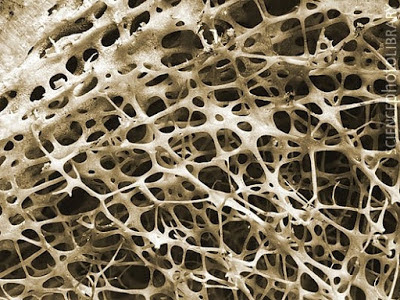
The Spomgeam: An object full of holes
The following is a mathematical impressionist’s sketch of evolution and in particular of that enigmatic object I keep talking about, the “spongeam”; an object that is a necessary condition for evolution. As usual I make known my caution about claiming the existence of this object (See here for example), but in this post I am proceeding under the assumption that it exists.

When it comes to writing an all embracing mathematical equation for an object like evolution we are likely to remain in the land of make believe for a long while; the mathematics, at least my mathematics, is never going to be anywhere near complex enough. Moreover, there is one aspect of this affair I have found difficult to render and that is what is very probably the non-linear nature of evolution. Non-linearity arises because organic forms influence and create environments and therefore this in turn will affect evolution, very likely with non-linear feedback. (More about this later) 

But not to be out done….. as the saying goes: If you can’t solve a difficult problem try solving a simple problem like it. Well that’s what I’m doing here; in fact I’ve simplified things to the point of it really only being a metaphor that helps us to picture evolution in a very abstract way. So what’s below can’t be taken too seriously; it’s still very much a toy town model and is likely to remain so. Even so, I find the model below does help me think about conventional evolution abstractedly and perhaps may even pave the way for more sophisticated metaphors sharpening the focus further.

My starting assumption is that when living configurations breed their offspring vary randomly and by this I understand that each generation shifts a little in configuration space in a way that at least approximates to random walk. In using this mathematical abstraction we abstract away all the exact details of genetics and inheritance; all we assume is that a breeding organism is surrounded by a probabilistic halo in configuration space, a halo which means it can only generate offspring that on average are within a relatively short distance of its own form. One important reason for abstracting away all the conventional microbiological mechanisms of variation is that it is entirely conceivable these details are contingencies which are not a necessary condition for more general models of evolution.

If we start by assuming that a complex of causes result in variation and imply at least a pseudo random walk, then it follows that the distributions of offspring in configuration space will approximately obey diffusional laws. So let’s start with the multidimensional diffusion equation:

Equation 1

The symbol Y represents the distribution of living things in configuration space. Because configuration space has n-dimensions I’ve used the “house”2 symbol rather than the “Del”2 symbol of three dimensional diffusion. The diffusion coefficient resolves into three factors e, w and v. These symbols represent the typical step distance, the step probability and step velocity of random walk respectively (See my book Gravity and Quantum Non-Linearity for a proof of this). I’ve also thrown in the variable A to absorb any other factors we might think necessary.

In this model we imagine that living things replicate themselves with slight differences due to a multiplicity of causes (or perhaps  even acausal changes), a difference typified by the value e with a probability of w. I’m making another simplifying assumption here by assuming  w is not positionally or directionally dependent; that is, the probability of an organism generating any variant is the same for all variants within a typical distance of e. The rate at which an organism generates offspring is measured by the step velocity, v. In ordinary random walk we usually imagine a single agent walking around and generating a distribution graph that is in fact a probability curve, but in the random walk we are dealing with here the agent “walks” by replicating incremental variants in the surrounding space; in fact the parent doesn’t step at all but stays at the original position: it’s the production of offspring which does the stepping. 

So, from this model it is clear that if Y is integrated over configuration space the resultant value changes in time as it represents a changing population number; this contrasts with ordinary random walk where the distribution normalizes to unity when integrated. But we must also  remember that organisms die.  There is therefore a term missing from the right-hand side of equation 1. Viz:

Equation 2

The second term on the RHS caters for the combined effect of organism death and reproduction. The term reflects the assumption that in a population both the death rate and birth rate are proportional to population which in turn is proportional to Y. Hence the net result is the difference between a birth rate proportionality constant R and the death rate proportionality constant D. Simplifying by putting V = R – D gives:

Equation 3
Although this equation is relatively simple it hides many potential complexities in its variables. Leaving aside possible variation in e, w and v which could in fact make them vector fields, much complexity can potentially reside in the scalar field variable V, so let’s see what we can get out of V alone.

If an organism varies randomly then the destructive nature of randomness will ensure that the (overwhelming?) majority of variations are likely to be disadvantaged when it comes to reproduction and survival. Hence we expect most random variants to display a high value of D, so much so that we expect them to lead into (eventual) extinction (Hence the black holes in the picture of the spongeam). However, evolution, as we well know, depends on the conjecture that there are some walks where populations are maintained or even grow; it is along these pathways, if they exist, that it becomes possible for a population to “evolve”; that is, diffuse into new regions. These pathways must be both broad enough and traverse great enough distances in configuration space if they are to facilitate macro-evolution. It is this network of paths in configuration space that constitutes the spongeam.

Equation 3 has a form that is clearly related to the Schroedinger equation; in fact one only need insert “i” into the diffusion coefficient to get an equation with quantum behavior. In the Schrodinger equation analogue V constitutes the potential field and in equation 3 V would have a similar role. In particular, where V has a gradient it acts as kind of force which tends to drive the random walk in a particular direction. Thus I interpret the locations in configuration space where V has a gradient to be those places where a kind of “natural selection” is operating. But let’s note that natural selection is not a necessary condition for the general kind of evolution equation 3 allows. Provided V is positive in sufficiently extensive regions the diffusion of random walk gives rise to evolution even when V has no gradient. 

Each living configuration can only survive and replicate if it has the right construction and since it is the laws of physics which ultimately determine whether a configuration survives or dies then it follows that the value of V is implicit in the physical regime. Thus, if the spongeam exists to provide evolution with the requisite information then it follows that this information is implicit in physics, perhaps even physics we have yet to understand.  Hence conventional evolution depends on frontloaded physical information and this naturally raises questions about the origins of that information.

Non-Linearity: Non linearity arises in equation 3 because V is influenced by the very existence of life; that is, life is itself a significant part of the environment in which configurations survive and replicate. Mathematically this means that V is likely to be a nonlinear function of Y. Moreover, V is not going to be just a function of the local value of Y, but also the value of V elsewhere in configuration space. This is because widely diverse living configurations influence the environment of one another.  It is this complex feed-back feature, very dependent on the twists and turns of the history of life, which make it difficult to write an all embracing succinct evolution equation.

Let’s face it, equation 3 is even worse than the Drake equation: Too many unknowns make it all but insoluble, but at least it gives us a conversation piece....that is, something to talk about.

Wednesday, February 24, 2016

On Structuralism and the Spongeam

There has been some discussion on the web on the subject the "structuralism" proposed by Micheal Denton. Denton proposes a very strong view of structuralism; that is that the configurations of organic forms are an outcome of the the laws of physics, so much so in fact that replaying the evolutionary story would lead to very similar forms. Anyway that is at least how Larry Moran interprets Denton:

As Denton says, the basic idea is that the form (structure) of modern organisms is a property of the laws of physics and chemistry and not something that evolution discovered. He would argue that if you replay the tape of life you will always get species that look pretty much like the species we see today because the basic forms (Baupläne) are the inevitable consequences of the underlying physics.....To someone like Denton, this is confirmation of his view that God created the universe and endowed it with all the properties (laws of physics and chemistry) that would inevitably produce humans.

The Spongeam as a 3D Metaphor
If we proceed assuming the existence of the spongeam then to the above I would have to say both "yes" and "no". The spongeam is a bit like a complex and fuzzy rail or road network which I assume would have to be implicit in the physics we know or perhaps even some physics we have yet to know.  If we set going randomly walking agents in this network they are unlikely to end up in the same place if the experiment is repeated and yet in order to make evolution an outcome with a realistic probability the spongeam, must be a highly constrained object in comparison to the space of all possible configurations. Ergo, the information required to generate life would have to be implicit in front loaded physics. 

So, I can't really take sides on this subject: Denton is far too strong on the subject of physical determinism and evolutionary repeatably. In contrast Moran is far too weak on the subject and seems unaware of the important role that front-loaded information would have to play in conventional evolution, This must be a classic example of debate polarization. As for myself I think that the existence of the spongeam is unlikely.

There are a couple of odd features of this debate that I would like to point out.:

1. The de-facto IDists seem to be taking Denton's side: That's interesting because as far as I'm aware they don't like the idea that physics contains a enough information to render evolution probable: Does that mean that they are prepared to accept that "natural-forces-did-it" after all? But having said that I realise the de-facto IDists are often happy with anything that vandalizes current evolutionary theory!

2. Micheal Denton's Wiki page says:
Denton's current interests include defending the "anti-Darwinian evolutionary position" and the design hypothesis formulated in his book Nature’s Destiny.[2] Denton describes himself as an agnostic......He describes himself as an evolutionist and he has rejected biblical creationism

Compare that with Larry Moran's statement above. Also here's what PZ Myers says about Denton:  

Larrry Moran has heard the words of Michael Denton, and has come away with a creationist interpretation of structuralism. I have to explain to Larry that Denton, as you might expect of a creationist, is distorting the whole idea. Here’s the Denton/Intelligent Design creationism version of structuralist theory......

***

My work on the Spongeam can be seen here:

Larry Moran On Denton:

PZ Myers on the Structuralism debate:

Uncommon Descent:

Thursday, February 18, 2016

More from the false dichotomy zone


Evangelical atheist Loran Moran, on whose blog I first saw the above video, seems pretty livid with its content. It's a talk by Intelligent Design guru Paul Nelson and it is really very typical of the strategy one finds across the board with the brand of IDism represented by Nelson. This strategy involves finding sufficient material to become wowed! by the huge problems faced by evolutionary theory, problems often expressed by eminent aficionados of the theory itself. Four minutes near the end of the video Nelson probably feels he's through with his bombardment of the edifice of evolution and its now time to go over the top. So after 36 minutes of being wowed! he turns the theme on a sixpence and introduces the standard IDist natural processes vs. intelligence dichotomy. a dichotomy which implicitly assumes ID's flawed epistemic filter. Nelson then concludes that God Intelligence created life. But the explanatory filter is toxic for theism. The filter is rightly used for ancillary intelligence such as humans or even aliens who are working within the confines of the cosmos: But arguably humans and aliens are natural processes! Moreover, should it be satisfactorily demonstrated that the cosmic physical regime can generate life the naive eminent theism of Nelson becomes problematic.

 As I have repeated many times on the this blog. de facto IDism like that promulgated by Nelson depends on the assumption of a sharp distinction between intelligence and natural process. Nelson expresses this dichotomy in another way; he talks of the limitations of Methodological Naturalism. This concept is itself deeply problematical: Is it based on drawing a line around the set of ontological objects  or  the set of epistemological objects? As a rule IDists like Nelson just assume the category is plain. My  guess is that  the supernatural vs natural distinction, a distinction which pervades the background of Western thought, is lurking behind the scenes here. The distinction becomes explicit in Christian fideism and gnositicism where ontological and epistemological distinctions are combined: Viz: It is thought that supernatural objects are only understood by supernatural means; Here Methodological Naturalism is defined apophatically in terms of what it is not

Note: 23/2/16
A form of "Naturalism" may define it as the science of "matter". But "matter" can only be a theoretical construction built upon observation. But an observation based epistemic is apparently more general than the theoretical constructions that may be placed upon observation thus begging the question of whether observation might reveal that "matter" is not a comprehensive theoretical account of the cosmos. However, it is possible to adopt the assumption that the ontology of "matter" is an exhaustively comprehensive ontology. In which case "matter" becomes not only everything we can observe but also provides a theoretical account of observation itself. If one drops the naive idea of "matter" as a primary ontology of "particulate grains" and use the more sophisticated notions of mathematical "law & disorder" descriptions then we find that "matter" in this sense is not a basis for atheism*: For "matter" rather than being a primary ontology then becomes a way in which mind comprehends itself; mind and matter justify one another in a mutually supporting circle: Viz: "Matter" gives a causal account of mind in terms of law and disorder, but mind supplies the meaning of that account in positivist terms of experience and comprehension of that account. It may be that asiety has its basis in this kind of circularity. See the remarks in the appendix of this blog post for example.

Footnote
* I'm generalising the term "atheism" here to include also the tendency to deny the existence of the first person perspective of conscious cognition. 

Monday, February 15, 2016

Caution! You are about to enter Intelligent Design's false dichotomy zone!

According to some IDists you’re either an IDist or a blaspheming heretic in league with satanic atheists.

Here's the general idea of a false dichotomy
Below I have reproduced an article which was recently posted on the de facto Intelligent Design Web site “Uncommon Descent”. It epitomises some of the dichotomised logic of the de-facto ID community who habitually work within a “natural processes” vs God “intelligence” paradigm. They do not accept that there are Christian scientists out there who have, in clear conscience, intelligently reconciled evolution with their faith. The pratfall of the kind of IDism we see below is embodied in the attempt to define evolution (which they wrongly refer to as “Darwinism”) using such a corrupt straw man version of it that it is impossible for Christian evolutionists and even atheists to accept. They keep trying to pass off a mangled version of “Darwinism”, laden with their own deep misconceptions, as the genuine article and then use it to impune Christian evolutionists. In the light of this kind of polarised thinking I suspect that latterly UD is lurching in a fundamentalist direction; as a general rule fundamentalist also have a love of strawman shibboleths which they foist on outsiders and serve as black and white category markers separating the sheep from the goats.

Before I go any further I must flag my usual disclaimer: I’m not a conventional evolutionist myself; I am, in fact, an Intelligent Construction Creationist who is exploring the concept of “backloading" - see here. Let me emphasize here that I'm exploring, not asserting IC in order to use it as a platform from which to slag-off everyone else. For there are many Christians of good conscience who are standard evolutionists and who are certainly not obliged to accept the corrupt travesty of evolution peddled by StephenB below (I shall call him just “B”). In the following quotes from B  all emphases are mine:

(See:http://www.uncommondescent.com/intelligent-design/god-and-darwin-why-they-simply-cannot-co-exist/)

God and Darwin: Why they simply cannot co-exist
February 11, 2016      Posted by StephenB under Intelligent Design
17 Comments
As UD readers know, Charles Darwin changed history when he argued that naturalistic processes, acting alone, can drive the macro-evolutionary process from beginning to end. His earth-shattering message was that nature’s pseudo-creative mechanism can mimic the work of a designing Creator. That he could not support his claim with empirical evidence did not seem to bother him very much.

My Comment: Implicit in B’s “naturalistic processes acting alone” is the Nature vs. God dichotomy. As in all science evolution can only ultimately make claim to being a description of nature, but not its inner theological driving engine. Theological issues apart (and, true, there are several such issues) a Christian evolutionist should envisage God as the immanent power that reifies the platonic patterns of the process. After all, the posited “randomness” of evolution is just another behaviour pattern of a particular mathematical type; the mathematical description of the pattern of randomness is not in-and-of-itself an explanation of the underlying power which reifies that pattern. 

As far as I’m aware Darwin was, repeat, was very bothered by the paucity of evidence. However, evolutionary theory posits what is a huge structure with a large time dimension and which is probably computationally irreducible to boot. To assemble enough evidence to constitute a logically watertight case for evolution is likely impossible.  I suspect B doesn’t have a very firm grasp of the nature of evidence: See my posts on epistemology on this subject: See the links posted here for example:  

From then until now, the texture of the argument has not changed. Neo-Darwinists, without a shred of evidence, and in the name of disinterested science, declare that nature can produce biodiversity all by itself, which means, without God’s help. Incredibly, some well-meaning Christians try to argue the God “used” this aimless mechanism to achieve his specific goal of creating man.

“What’s the problem,” they ask? “Evolutionary scientists are the ‘experts,’ aren’t they? They have no special axe to grind even if most of them are partisan atheists. Besides, God can use purely naturalistic processes to produce the outcome He wants.”

My Comment: Bunk! Evolution has plenty of evidence although I personally would want to qualify that by suggesting that it may not amount to obliging evidence; perhaps the available evidential “dots” can be joined by other explanatory structures. B’s over-the-top “without a shred of evidence” will ensure he gets approving noises from the ID gallery! Once again this guy’s comment suggests to me he doesn’t really grasp what “evidence” means.

If God is immanent, it is very difficult to conceive what B means when he says: nature can produce biodiversity all by itself, which means, without God’s help. Even if the universe displayed completely random patterns (a form of pattern which is in fact a highly sophisticated mathematical object) then theologically God would still have to be the reifying power behind it.

Now at this point B could raise difficult theological issues about how death and disease are intrinsic to conventional evolution, but no, he continues to manifest his complete ignorance of what evolution is really all about:

This is bad logic on parade. [Look who’s talking! – ed] Let’s examine that last claim from a rational perspective. A (Neo)Darwinian process, as described, is open-ended. By virtue of its randomness (purposelessness), it is free to produce many possible outcomes, most of which will not reflect the Creator’s intentions. To guarantee the desired outcome, the Creator must front load or tweak the process (mechanism) so that unwanted outcomes are closed off. But if the process is constrained from the outside, then it is no longer “acting alone,” and is no longer “free” to produce unwanted outcomes. In other words, it is no longer a Darwinian process as defined by the evolutionary scientists. Thus, God cannot use a Darwinian mechanism to achieve a specific goal. If God did use evolution to create man, he would have had to either design or supervise the process.


My Comment: B appears to identify randomness with purposelessness on the basis of his gut feeling, rather than see randomness as a pattern of a particular mathematical type. It is this spurious intuitive connotation which I suggest is getting B into intellectual trouble: For whenever a Christian evolutionist might refer to randomness, B will automatically read that as “purposelessness” thus giving him an opportunity to read "heresy" behind the lines. However, if randomness if defined in terms of a class of mathematical pattern this does not necessarily connote purposelessness (See here for my own work on randomness)

B equates “constrained from outside” with “no longer acting alone”. Our physical regime is clearly constrained (presumably by the divine sovereign will) to behave according to narrow probabilistic envelopes. Therefore from B’s logic it follows that the physical regime is not acting alone! Therefore on his own logic B ought not to be surprised if our physical regime generates life!

Let us leave on one side the huge theological problems entailed by a world of suffering and evil; this is a major theological paradox, where to use B’s expression, outcomes might “not reflect the Creator’s intentions”, and this paradox is a superset of the theological problems with evolution: If conventional evolution holds sway then it is just part of a much bigger theological issue that Christians try to cope with. Christians have to live with this paradox in any case and so evolution introduces just more of the same theological conundrum where good can, paradoxically, emanate from bad.

B’s reference to front loading and even “tweaking” are, in fact, entirely correct. But then those who understand evolution best, like say atheist Joe Felsenstein, are perfectly aware of this and accept that information frontloading is a necessary condition of a working model of evolution (See my blog post here). And yet someone like Felsenstein is a fully paid up atheist and evolutionist.  B thrusts his highly distorted depiction of evolution as an unconstrained process into the mouths of others, Christian and atheist alike. This behaviour of stuffing blasphemies into the mouths of others is very reminiscent of fundamentalist Jason Lisle. B’s perverse view of evolution is a strawman through and through. In short, contrary to what B claims, evolution is entirely consistent with frontloading.

For more on this subject see the following posts. Of particular interest are the comments by mathematician Mark Chu-Carroll who is a theist of Jewish faith.

The nub of B’s theological cock-up is that he is thinking in naive anthropomorphic terms about the nature of design: He sees the Almighty preparing His blueprints in advance and then imposing them on matter with His iron will. This is in fact all too typical of the authoritarian and forceful slant of fundo-evangelical Christianity.  But as a model of design it’s not even true of the human design process. B doesn’t realise that the act of building, experimenting, and designing are inextricably mixed. The act of construction is itself an intelligent process involving searching and problem solving; what I refer to as intelligent construction rather than intelligent design. However, I’ve got to hand it to Granville Sewell; he’s the first (and last) IDist I’ve seen who seems to have some inkling about intelligent construction as opposed to intelligent design! See here.

To understand more fully why Christian Theism is on a totally different pathway than Darwinian evolution, we can subject the two models to a sequential analysis:

In the case of Teleological Theism, the design precedes and shapes the process. In the case of Darwinian Evolution–the process precedes and shapes the design (appearance of). Notice that there can be no reconciliation. To affirm one perspective is to negate the other. Either God’s real design precedes and shapes the process (Teleological Theism) or, the evolutionary process precedes and shapes the appearance of design (Neo-Darwinism). It must be one or the other. It cannot be both.

The attempt to reconcile God with Darwin may be likened to a misguided carpenter who tries to plug a square peg into a round hole. In the absence of a natural fit, he may press, twist or re-position the square peg in a futile attempt to make it “compatible” with the circle. Or, he may even hammer the peg until it breaks the wood and penetrates the hole—or what is left of it. At that point, it may seem to fit the hole, insofar as it occupies the same space, but of course, it doesn’t. The damaged hole is compromised; it is no longer the same hole.

Christian Darwinists may try to twist words, distort meanings, and mix messages in a futile effort to blend the Darwinian model with the Christian model, but it will not work. Insofar as the attempt is made, the Christian world view will be damaged and its teachings compromised. It will no longer be the same religion. The part will not blend with the whole. Does this mean that science is incompatible with faith? No. It means that Neo-Darwinist ideology is incompatible with science. I sincerely wish that flexible Christians who are inflexible Darwinists would try to make that distinction.

My Comment: No! As I’ve already said, in any real cognitive design process searching, problem solving and construction are inextricably mixed. Therefore we cannot claim as B does that design unambiguously precedes the process. Therefore reconciliation between process and design is possible; they are not thesis and antithesis. B has created a false dichotomy in his mind; he then foolishly thinks others Christians are stupid enough to swallow it; for in his polarised world he forces on the debate what he wrongly sees as a straight choice between truth (his views of course) and heresy.  To see the debate through  this kind of false dichotomy is the hallmark of blueprint fundo-evangelicalism which all too typically envisages an eminent authoritarian hyper-masculinised God imposing his highly focused will upon a submissive nature from on high. This theology is flawed. B then tries to impose the black vs. white choices entailed by his corrupt, brittle and inflexible categories on other Christians who on the basis of his straw man shibboleth may well find themselves being accused of heresy and perhaps even blasphemy and apostasy. To re-quote B:

It must be one or the other. It cannot be both…. the Christian world view will be damaged and its teachings compromised. It will no longer be the same religion. The part will not blend with the whole

Let me end by repeating the following: I am myself an Intelligent Construction creationist; that is I see the very process of construction as part and parcel with intelligence. I  disassociate myself from the stultifying categories of the blueprint fundo-evangelicalism seen above. I make no bones about the fact that many an atheist would think of me as a complete nincompoop for taking seriously the idea that some of them understand as “the magic man in sky”.  But there is little to be gained from reasonable atheists not only having to put up with what to them is nincompoopery, but also the domineering nastiness we get from some of the right-wing fundo-evangelical representatives of the faith.

The de facto IDiots have set themselves up for this kind of lampooning.

Tuesday, February 09, 2016

Denis Alexander is coming to Norwich Cathedral.

Breaking the horizon from left to right are: Norwich Castle, St Peter Mancroft, Norwich City Hall and Norwich Cathedral. If you know where to look there are at least nine medieval churches visible in this picture. Good website on Norwich here.


Biologist Denis Alexander is scheduled to do a lecture at Norwich Cathedral entitled Evolution & Adam: Reality, Myth & Symbolism. I hope to attend. 

Recently, I noted that evangelical atheist and Toronto Professor of Biochemist Larry Moran has done several blogs on Alexander: See here, here and here. Larry has always taken the line that science is a comprehensive and exclusive way of knowing. Actually, I might have a qualified agreement with him on that, but not for the reason that you might think, which in Larry's case seems to be connected with his evangelical way of drawing an epistemic line around what he deems as authentic knowledge. I've seen plenty of that kind of noetic hegemony my time!

My dispute with Larry Moran is that he doesn't really grasp just how epistemically flaky our world really is, especially as it seems to throw up observational erratics and one-offs. As a result we either need to generalise the meaning of "science" or alternatively formalize that meaning with the understanding that science's formal relation between theory and experience must give way to a more informal seat-of-the-pants relation when moving out of the physical sciences into the sociological. However, I'm in general agreement that in the final analysis an epistemology involving a contention between theory and experience, between narrative and text (see my side bar) covers an all but exhaustive epistemic domain*. Larry Moran, however, has a very specialized laboratory level understanding of epistemology. This would be OK if it were not for the fact that it's simply impossible to observe everything under lab conditions. In my view he needs to generalise his epistemology which might help smooth off those sharp unforgiving evangelical edges.

Talking about evangelicals; Denis Alexander's Wiki page categorizes him as an evangelical Christian. I was once evangelical myself but for many reasons now find I'm veering toward a more liberal stance. Therefore, I think I might be even more interested in Alexander's take on Christianity than his biology.  However, there is no disputing that Alexander is a great man of faith who doesn't stint on his witness to Christ.  The de-facto IDists and the fundamentalists are very critical of Alexander and in comparison Larry Moran's criticism seems muted  As I don't get on well with de facto IDists and fundies, I've probably got something in common with Alexander!

Finally, relevant links: There is no point in repeating here in detail just why I find Larry Moran's epistemic outlook blinkered. Below are links to posts I've done on epistemology, some specific to Moran's views and where he himself gets more than an honourable mention.


http://quantumnonlinearity.blogspot.co.uk/2012/11/coping-with-white-space.html
http://quantumnonlinearity.blogspot.co.uk/2012/08/its-science-larry-but-not-as-you-know-it.html

Footnote
* Verifying this vision of generalised science uses the same theory vs. experience,  narrative vs. text  contention to verify itself. It's one of those circularly self supporting concepts.  Circularity is OK provided it is self-affirming rather than contradictory: See 
This concept of self affirming circularity may be at the the bottom of Aseity. See comments at the end of this post: